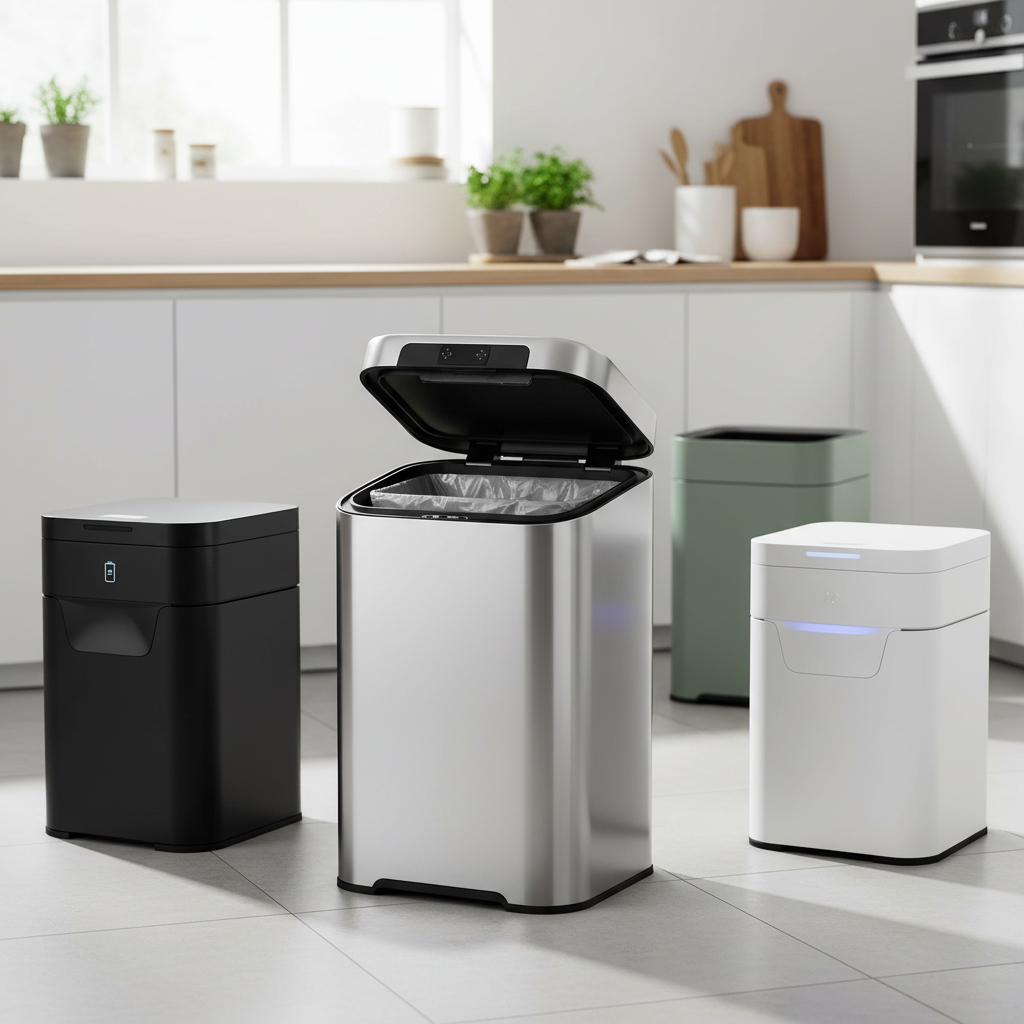
The evolution of smart home appliances has brought unprecedented convenience, and smart trash cans are a prime example, offering features like automatic lid opening and odor control. At the heart of their seamless operation lies a small but crucial component: the lid motor. The choice between plastic and metal gears within these motors significantly impacts the smart trash can’s performance, durability, and overall user experience. Understanding the fundamental differences in these materials is essential for manufacturers and consumers alike to appreciate the engineering behind these everyday marvels.
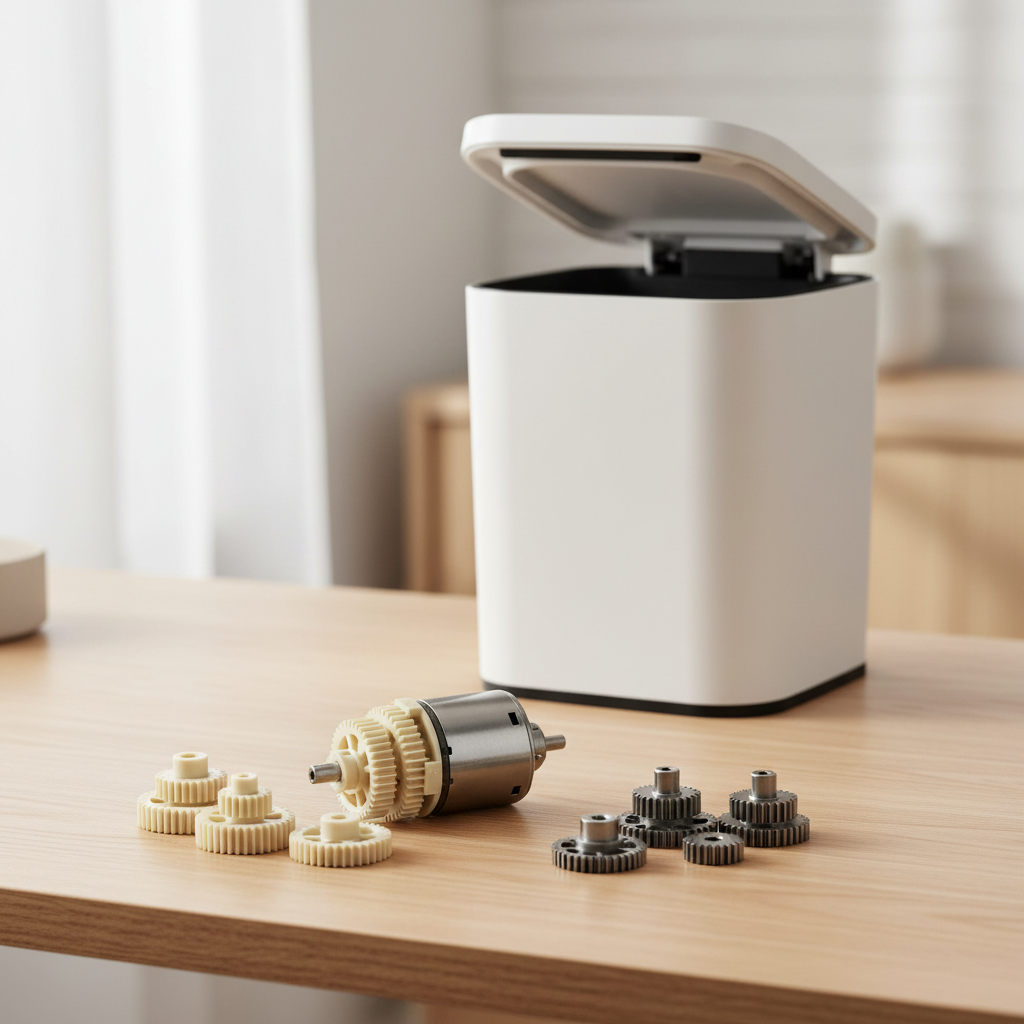
What Are Smart Trash Can Lid Motors? Why Material Choice Matters
Lid motors in smart trash cans are miniature electric motors equipped with gear systems designed to provide the necessary torque and controlled movement for automatic lid operation. These small powerhouses enable touchless opening, slow closing, and sometimes even compaction or sealing mechanisms. The gears inside these motors are responsible for reducing the motor’s high rotational speed to a usable lower speed while increasing the torque, allowing the lid to open and close smoothly and reliably.
The selection of gear material directly influences several critical aspects of a smart trash can. A poorly chosen material can lead to excessive noise, premature wear, inconsistent operation, or even complete failure, diminishing the product’s quality and customer satisfaction. Conversely, an optimal material choice ensures quiet, efficient, and long-lasting performance, aligning with the “smart” and convenient promise of these devices.
Key Properties and Performance Indicators for Gears
When evaluating gear materials for any application, including smart trash can lid motors, several performance indicators come into play, each contributing to the system’s overall effectiveness and longevity.
Strength and Load Capacity: How Much Force Can They Handle?
|
Our Picks for the Best Smart trash can in 2026
As an Amazon Associate I earn from qualifying purchases.
|
||
| Num | Product | Action |
|---|---|---|
| 1 | BestOffice | 13 Gallon Trash Can with Lid | Automatic Touchless Garbage Can | Odor Control | Modern Oval Design | Easy to Clean | Stainless Steel | Fits Any Kitchen, Bathroom, Office or Home |

|
| 2 | EKO Mirage-T 50 Liter / 13.2 Gallon Touchless Rectangular Motion Sensor Trash Can, Brushed Stainless Steel Finish (Matte Black) |
|
| 3 | Vanpopubs 2 Pack 2.7 Gal Bathroom Trash Can with Lid, Automatic Trash Can Small Smart Garbage Can Touchless, Slim Motion Sensor Waterproof Plastic Trash Bins for Bedroom Office Kitchen Toilet |
|
| 4 | Ninestars 13 Gallon Automatic Trash Can, 50L Touchless Motion Sensor Garbage Can with Odor-Sealing Lid, Rectangular Stainless Steel, Silver Trim |
|
| 5 | EKO Mirage-T 50 Liter / 13.2 Gallon Touchless Rectangular Motion Sensor Trash Can, Brushed Stainless Steel Finish |
|
| 6 | Bathroom Trash Can with Lid, KOEYLE 2 Pack 2.2 Gallon Automatic Touchless Garbage Can, Small Motion Sensor Smart Trash Can, Slim Waterproof Trash Bin for Bedroom, Bathroom, Office, Living Room (Black) |
|
| 7 | Ninestars 13 Gallon Odor Neutralizing Smart Trash Can, UV + Ozone Dual Purification, Odor Control Motion Sensor Garbage Bin, Universal Power Adapter, ONT-50-81SL Stainless Steel, Silver, Nova Series |
|
| 8 | Ninestars 13 Gallon Oval Automatic Trash Can, 50L Touchless Motion Sensor Garbage Can with Odor-Sealing Lid & One-Touch Manual Mode, Silver Stainless Steel, Black Trim |
|
| 9 | EKO Deluxe Mirage-T 50 Liter / 13.2 Gallon Touchless Rectangular Motion Sensor Trash Can, Matte Stainless Steel Finish |
|
| 10 | iTouchless 24 Gallon Extra Large Touchless Sensor Trash Can with AbsorbX Odor Filter, 91L Commercial Stainless Steel Automatic Kitchen Bin for Home, Office, Restaurant, Commercial Lobby, Store |
|
Strength refers to a gear’s ability to withstand operational stresses without deforming or breaking, while load capacity dictates the maximum force it can reliably transmit. For lid motors, the loads are typically light to moderate, but consistent operation means the gears must endure repeated stress cycles. Materials with high tensile and shear strength are crucial for applications requiring robust power transmission.
Durability and Wear Resistance: How Long Do They Last?
Durability indicates how well a gear maintains its structural integrity over time under repeated use. Wear resistance is the material’s ability to resist the gradual erosion of its surface due to friction and contact with other moving parts. Gears in lid motors are subjected to continuous meshing, making wear resistance a key factor in determining the lifespan and maintenance requirements of the mechanism.
Noise and Vibration: Impact on User Experience
For a household appliance, quiet operation is often a priority. Gears can generate noise and vibration during operation due to meshing teeth and inherent material characteristics. Materials with good damping properties can significantly reduce acoustic output, contributing to a more pleasant and unobtrusive user experience, especially in a quiet home environment.
Operating Temperature Range: Environmental Tolerance
The ambient temperature and any heat generated by the motor itself can affect gear performance. Materials must maintain their mechanical properties within the expected operating temperature range to prevent deformation, loss of strength, or premature failure. While smart trash cans typically operate at room temperature, internal motor heat can still be a consideration.
Corrosion and Chemical Resistance: Especially Relevant for Waste Environments
Gears in smart trash cans might be exposed to moisture, condensation, or even mild chemicals from cleaning agents or waste itself. Materials that are resistant to corrosion and chemical degradation will prevent rust, maintain structural integrity, and ensure hygienic operation over the product’s lifetime.
The Case for Plastic Gears in Lid Motors
Plastic gears have seen widespread adoption in numerous consumer electronics and light-duty applications, including smart trash can lid motors, due to a compelling set of advantages.
Advantages: Cost, Weight, Quietness, Corrosion Resistance, Self-Lubrication, Design Flexibility
- Cost-Effectiveness: Plastic gears are generally much less expensive to manufacture than their metal counterparts. Mass production through injection molding allows for rapid, high-volume output with significantly lower per-unit costs, potentially saving 50% to 90% compared to machined metal gears.
- Lightweight: Plastics are inherently lighter than metals. For instance, common plastics like nylon or acetal have a specific gravity significantly lower than steel, leading to lighter components that can reduce the overall weight of the motor and device.
- Quiet Operation and Vibration Damping: One of the most significant benefits for home appliances is plastic’s excellent noise and vibration damping properties. The intrinsic nature of polymers allows them to absorb vibrations, resulting in noticeably quieter operation compared to metal gears.
- Corrosion and Chemical Resistance: Unlike many metals, plastics are naturally resistant to rust and a wide range of chemicals. This makes them ideal for environments where moisture or cleaning agents might be present, such as in a kitchen or bathroom.
- Self-Lubricating Properties: Many engineering plastics, such as nylon and acetal, possess inherent self-lubricating characteristics. This reduces the need for external lubrication, minimizing maintenance and the risk of component failure due to insufficient lubrication.
- Design Flexibility: Plastic’s moldability allows for intricate and complex gear designs to be created with high precision and accuracy, often in a single manufacturing step, which would be difficult or costly to achieve with metal.
“For applications where noise reduction and weight are critical, plastic gears often provide an unbeatable combination of benefits, especially in high-volume consumer products.”
Disadvantages: Lower Strength, Temperature Sensitivity, Precision Limitations
Despite their advantages, plastic gears do come with certain limitations.
- Lower Strength and Load Capacity: Plastic gears typically have a lower load capacity and are not ideal for heavy-duty applications or transmitting high torque. They can be prone to deformation or failure under significant stress.
- Temperature Sensitivity: Plastics are temperature-sensitive. Exposure to high temperatures can cause them to deform, melt, or lose their mechanical strength, limiting their use in environments with elevated heat.
- Precision and Accuracy Limitations: While injection molding can achieve good accuracy, machined metal gears can often attain tighter tolerances, which might be crucial for extremely high-precision applications, though usually not a major issue for lid motors.
Common plastic materials used for gears include Nylon (PA), Acetal (POM), and Polycarbonate (PC), each offering a balance of properties suitable for various applications.
The Case for Metal Gears in Lid Motors
Metal gears have been the backbone of mechanical power transmission for centuries, known for their robustness and reliability in demanding environments.
Advantages: High Strength, Temperature Tolerance, Precision, Longevity
- High Strength and Load Capacity: Metal gears, made from materials like steel, brass, or aluminum, offer superior strength and can handle heavy loads and high torque without deforming. This makes them highly reliable for applications requiring significant power transfer.
- High Temperature Resistance: Metals can withstand much higher operating temperatures than plastics without losing their mechanical properties, making them suitable for environments where heat generation is a concern.
- High Precision and Accuracy: Metal gears can be machined to very tight tolerances, resulting in highly precise and accurate gear meshes. This ensures consistent performance and minimal backlash, crucial for applications demanding exact motion control.
- Durability and Longer Lifespan: Under heavy loads and high stresses, metal gears generally exhibit greater durability and a longer operational lifespan compared to plastic gears. They are more resistant to wear and fatigue over extended periods of use.
Disadvantages: Higher Cost, Weight, Noise, Corrosion Susceptibility, Lubrication Needs
However, metal gears also present certain drawbacks.
- Higher Cost: The manufacturing process for metal gears (forging, casting, machining, heat treatment) is often more complex and material costs can be higher, leading to a greater overall expense.
- Heavier Weight: Metals are inherently denser than plastics, making metal gears significantly heavier. This can impact the overall weight of a device and may not be desirable for weight-sensitive applications.
- Noise and Vibration: Metal-on-metal contact tends to generate more noise and vibration during operation, which can be a drawback for appliances designed for quiet environments.
- Corrosion Susceptibility: Many metals, particularly steel, are susceptible to rust and corrosion when exposed to moisture or certain chemicals, often requiring protective coatings or lubrication.
- Lubrication Requirements: Metal gears typically require periodic lubrication to reduce friction, prevent wear, and dissipate heat, adding to maintenance requirements.
Common metal materials for gears include various types of steel (e.g., hardened steel for strength), brass (for good wear properties), and aluminum (for lighter weight).
Comparison Table: Plastic vs. Metal Gears
To provide a clear overview, here’s a direct comparison of plastic and metal gears based on critical performance factors relevant to lid motors.
| Feature | Plastic Gears | Metal Gears |
|---|---|---|
| Cost | Lower (injection molding, material) | Higher (material, machining, heat treatment) |
| Weight | Very Lightweight | Heavier |
| Noise & Vibration | Low (excellent damping properties) | Higher (more mechanical noise) |
| Strength/Load | Low to Moderate (prone to deformation) | High (robust, handles heavy loads) |
| Temp. Resistance | Low (susceptible to deformation/melting) | High (withstands extreme heat) |
| Corrosion Resistance | High (natural resistance) | Low (susceptible to rust, requires treatment) |
| Wear Resistance | Moderate (can be self-lubricating but wears) | High (very durable) |
| Precision | Good (injection molded) | Excellent (machined to tight tolerances) |
| Lubrication | Often self-lubricating, low maintenance | Required (periodic lubrication) |
| Design Complexity | High (easily molded into complex shapes) | Moderate (costly for complex shapes) |
| Lifespan | Shorter (under higher stress/temp) | Longer (especially with proper maintenance) |
Factors to Consider When Choosing Gears for Smart Trash Can Lid Motors
Selecting the ideal gear material for a smart trash can lid motor involves balancing various practical and performance considerations to achieve the best outcome for the product and the user.
Application-Specific Needs: Light Duty vs. Heavy Duty
For smart trash can lid motors, the operational demands are generally light to moderate. The primary function is to lift and close a lightweight lid, not to transmit heavy industrial loads. This leans towards materials that excel in efficiency and quietness rather than brute strength.
Budget and Manufacturing Scale: Cost Implications
Given that smart trash cans are consumer goods often produced in high volumes, cost-effectiveness is a major driver. Plastic gears, with their lower material cost and efficient injection molding process, often present a more economically viable solution for mass-market products.
Noise Sensitivity: Importance for Home Appliances
Smart trash cans are used in homes where noise can be a significant annoyance. The ability of plastic gears to dampen sound and vibrations makes them a strong candidate for maintaining a quiet household environment, enhancing user comfort.
Environmental Factors: Moisture, Temperature
While primarily used indoors at ambient temperatures, the proximity to waste means potential exposure to moisture or cleaning solutions. Plastic’s natural resistance to corrosion and some chemicals provides an inherent advantage in maintaining performance and hygiene in such conditions.
Expected Lifespan and Maintenance
The expected lifespan of a consumer appliance and the desire for minimal maintenance also play a role. While metal gears typically boast a longer inherent lifespan under ideal conditions, the self-lubricating nature of many plastic gears can lead to fewer maintenance needs for the end-user, often aligning with consumer expectations for “set-it-and-forget-it” smart devices.
Expert Insights on Gear Material Selection
“The engineering decision for gear materials is rarely about ‘best’ but always about ‘most suitable’. For lid motors, balancing acoustic performance, cost, and sufficient durability for the application is paramount.”
Conclusion
The choice between plastic and metal gears for smart trash can lid motors is a classic engineering trade-off. While metal gears offer unparalleled strength, precision, and high-temperature tolerance, their cost, weight, and noise characteristics often make them less suitable for the specific demands of a consumer-focused smart appliance. Plastic gears, on the other hand, excel in areas critical for smart trash cans: quiet operation, lightweight design, corrosion resistance, and cost-effective mass production. These benefits, coupled with sufficient strength for typical lid-lifting tasks, often make advanced polymers the preferred material.
Ultimately, the optimal gear material for a smart trash can lid motor hinges on a holistic evaluation of the product’s design goals, budget constraints, desired user experience, and anticipated operating environment. By carefully considering these factors, manufacturers can select the gears that ensure their smart trash cans operate silently, efficiently, and reliably for years to come. What criteria do you prioritize when evaluating the performance of smart home devices?
Frequently Asked Questions
Are plastic gears durable enough for daily use in a smart trash can?
Yes, modern engineering plastics are quite durable and sufficient for the light to moderate loads typically encountered in smart trash can lid motors. Their lifespan is generally adequate for the product’s expected useful life, especially with proper design and material selection.
Do metal gears make smart trash cans louder?
Typically, yes. Metal gears tend to generate more operational noise and vibration due to the nature of metal-on-metal contact. Plastic gears are favored in smart trash cans precisely because of their superior noise-dampening qualities, contributing to a quieter home environment.
Are plastic gears in lid motors easily broken?
While less robust than metal, plastic gears are not inherently fragile. They are designed to withstand the forces involved in opening and closing a trash can lid. Breakage usually occurs under excessive, unforeseen loads or if the wrong type of plastic is selected for the application.
Why are plastic gears often chosen despite their lower strength?
Plastic gears are chosen for applications like lid motors due to their significant advantages in cost-effectiveness, lightweight properties, excellent noise reduction, and inherent corrosion resistance—factors that often outweigh the need for extreme strength in light-duty consumer products.
Can smart trash cans with plastic gears handle varying temperatures?
Plastic gears perform well within typical indoor ambient temperatures. However, extreme heat can cause some plastics to deform or lose strength. Most smart trash cans are designed for indoor use, so this is generally not a significant concern.