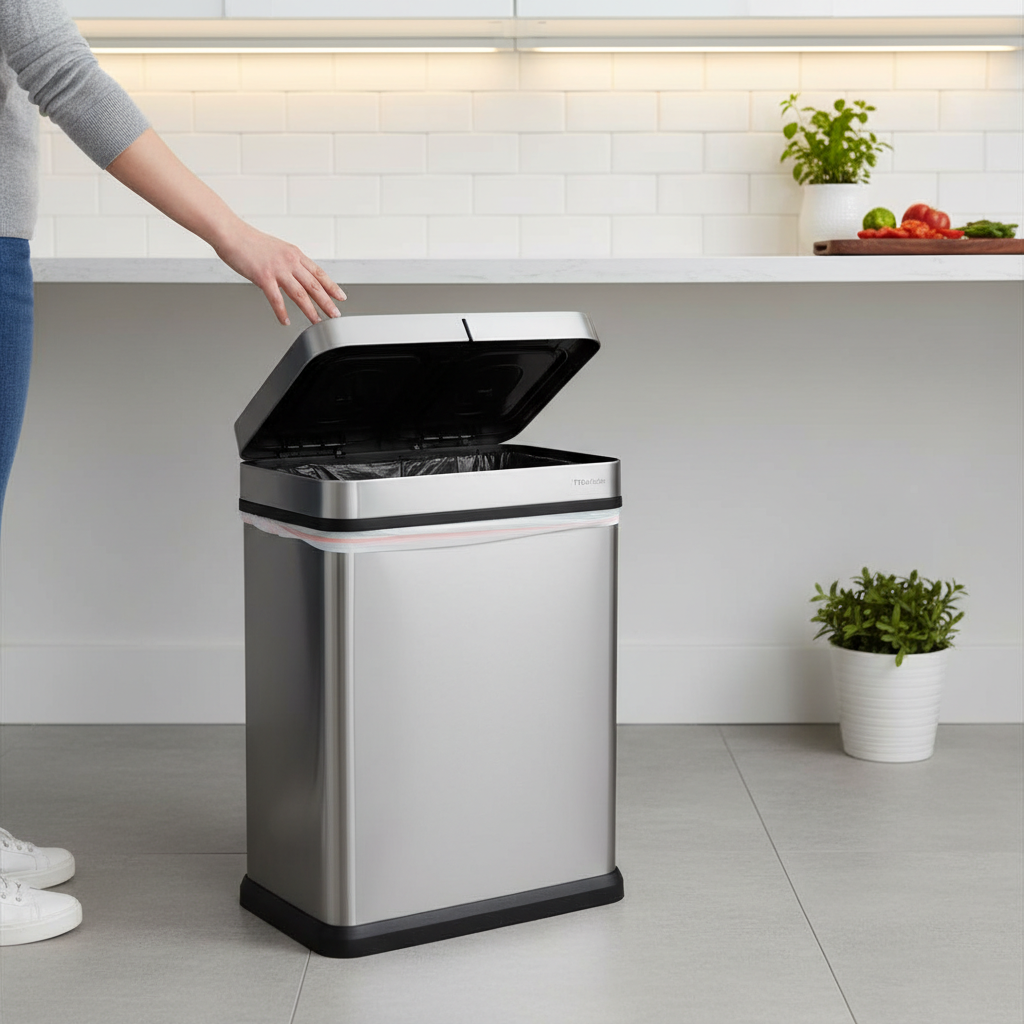
Smart trash cans have revolutionized waste disposal, offering unparalleled convenience with their automatic lids, odor control, and sometimes even waste sorting capabilities. But what happens when the very heart of this convenience—the motor—decides to stop working? A malfunctioning motor can turn your smart bin into an ordinary one, or worse, an expensive paperweight. Before you discard your entire unit, consider a do-it-yourself motor replacement. This comprehensive guide will walk you through everything from understanding your smart trash can to the detailed steps of replacing its motor, saving you money and extending the life of your beloved gadget.
What is a Smart Trash Can? Why Use One?
A smart trash can is an advanced waste disposal unit designed to automate mundane tasks associated with garbage. At its core, it typically features a motion sensor that triggers an automatic lid opening, a crucial function often powered by a small electric motor. Beyond this, many models include odor-absorbing filters, infrared sensors to prevent premature closing, and touchless operation for improved hygiene. The primary benefits of using a smart trash can include enhanced sanitation by minimizing contact with germs, superior odor control, and a modern aesthetic that complements contemporary homes. These devices offer a blend of technology and utility, making waste management a more seamless and pleasant experience. While variations exist in design and advanced features, the underlying principle of motorized automation remains consistent across most smart bins.
Key Features of Smart Trash Cans
Smart trash cans boast several features that contribute to their user-friendliness and efficiency, many of which directly or indirectly rely on motor functionality.
Automatic Lid Sensor: How it Works and Its Importance
|
Our Picks for the Best Smart trash can in 2026
As an Amazon Associate I earn from qualifying purchases.
|
||
| Num | Product | Action |
|---|---|---|
| 1 | EKO Mirage-T 50 Liter / 13.2 Gallon Touchless Rectangular Motion Sensor Trash Can, Brushed Stainless Steel Finish (Matte Black) |

|
| 2 | iTouchless 24 Gallon Extra Large Touchless Sensor Trash Can with AbsorbX Odor Filter, 91L Commercial Stainless Steel Automatic Kitchen Bin for Home, Office, Restaurant, Commercial Lobby, Store |
|
| 3 | Bathroom Trash Can with Lid, KOEYLE 2 Pack 2.2 Gallon Automatic Touchless Garbage Can, Small Motion Sensor Smart Trash Can, Slim Waterproof Trash Bin for Bedroom, Bathroom, Office, Living Room (Black) |
|
| 4 | Vanpopubs 2 Pack 2.7 Gal Bathroom Trash Can with Lid, Automatic Trash Can Small Smart Garbage Can Touchless, Slim Motion Sensor Waterproof Plastic Trash Bins for Bedroom Office Kitchen Toilet |
|
| 5 | Ninestars 13 Gallon Automatic Trash Can, 50L Touchless Motion Sensor Garbage Can with Odor-Sealing Lid, Rectangular Stainless Steel, Silver Trim |
|
| 6 | Ninestars 13 Gallon Odor Neutralizing Smart Trash Can, UV + Ozone Dual Purification, Odor Control Motion Sensor Garbage Bin, Universal Power Adapter, ONT-50-81SL Stainless Steel, Silver, Nova Series |
|
| 7 | EKO Deluxe Mirage-T 50 Liter / 13.2 Gallon Touchless Rectangular Motion Sensor Trash Can, Matte Stainless Steel Finish |
|
| 8 | Ninestars 13 Gallon Oval Automatic Trash Can, 50L Touchless Motion Sensor Garbage Can with Odor-Sealing Lid & One-Touch Manual Mode, Silver Stainless Steel, Black Trim |
|
| 9 | EKO Mirage-T 50 Liter / 13.2 Gallon Touchless Rectangular Motion Sensor Trash Can, Brushed Stainless Steel Finish |
|
| 10 | BestOffice | 13 Gallon Trash Can with Lid | Automatic Touchless Garbage Can | Odor Control | Modern Oval Design | Easy to Clean | Stainless Steel | Fits Any Kitchen, Bathroom, Office or Home |
|
The most recognized feature is the automatic lid, which opens when a hand or object approaches the sensor and closes after a short delay. This mechanism is almost universally powered by a small DC motor or servo motor connected to a gearbox. The motor’s health is paramount for this feature to work. Advantages include hands-free operation and reduced cross-contamination. A common issue often signalling motor wear or failure is erratic lid movement, slow opening/closing, or a complete lack of response.
Odor Neutralization and Sterilization: Technologies and Effectiveness
While not directly motor-driven, some high-end smart trash cans integrate odor control systems, such as activated carbon filters or UV-C sterilizers. These often require tiny fans or mechanisms that might be indirectly powered or controlled by the same electronic system that manages the lid motor. Effective odor control significantly improves the hygiene of your living space.
Automatic Waste Sorting: Types and Accuracy
More advanced smart bins feature internal compartments or even robotic arms that can sort waste based on material. These complex systems are heavily reliant on multiple motors—for movement, sorting, and compaction—making motor health even more critical. The accuracy of sorting depends on sophisticated sensors and the precise operation of these internal motors.
Connectivity and Smartphone Control: Features and Benefits
Some premium smart trash cans offer Wi-Fi or Bluetooth connectivity, allowing users to monitor fill levels, activate sterilization cycles, or even receive alerts via a smartphone app. While the motor itself isn’t controlled directly by the app, the app interface communicates with the main control board, which then commands the motor. This integration adds a layer of convenience and smart home integration.
Comparing Popular Smart Trash Can Models
When considering a smart trash can, or a repair, understanding the variety of models helps. While the core “motor replacement” principles can be universal for similar small DC motors, specific disassembly might vary.
| Feature | Budget Models | Mid-Range Models | Premium Models |
|---|---|---|---|
| Brands | Generic, less-known online brands | Simplehuman, EKO, Glad | Townew, Ninestars, some Simplehuman |
| Capacity | Small to Medium (up to 13 gal) | Medium to Large (13-20 gal) | Large (15+ gal) |
| Material | Plastic, basic stainless steel | Stainless steel, durable plastic | High-grade stainless, fingerprint-resistant |
| Lid Tech | Basic IR sensor, sometimes slow | Responsive IR sensor, soft-close | Advanced IR, voice, kick sensors, fast response |
| Odor Control | None or basic filter | Carbon filter, sometimes a fan | Active deodorizer, UV-C, sealing |
| Battery Life | 3-6 months (AA/D batteries) | 6-12 months (D batteries, rechargeables) | 1-2 years (rechargeable, efficient motors) |
| Extra Features | None | Liner rim, manual override | Self-sealing, sorting, app control, compaction |
| Motor Type | Basic DC or micro servo | Geared DC motor, often more robust | Specialized geared DC or stepper motor |
This table provides a general overview. For DIY motor replacement, the type and accessibility of the motor are more critical than brand names.
Tips for Choosing the Right Smart Trash Can
While this article focuses on repair, thoughtful selection can simplify future maintenance. When choosing a smart trash can, consider factors that influence its repairability and longevity.
Determine Usage Needs: Who, What, Where
Assess your household size, typical waste volume, and where the trash can will be placed. A high-traffic kitchen bin will experience more lid cycles, putting more stress on the motor. Opting for models with easily accessible battery compartments and lid mechanisms can simplify future troubleshooting.
Choose Capacity and Size: Fit and Function
Ensure the trash can’s capacity and dimensions fit your space and lifestyle. A larger capacity might mean a heavier lid and thus a more robust motor or gearbox is required, which could affect the complexity of replacement.
Prioritize Essential Features: What You Truly Need
Decide which features are non-negotiable. If automatic lid operation is your priority, focus on models known for reliable motor systems. Features like self-sealing or sorting indicate more complex internal mechanics, potentially leading to more involved motor replacement processes.
Material and Durability: Longevity and Aesthetics
Stainless steel is durable and aesthetically pleasing but can be harder to disassemble without specialized tools. Plastic bins might be easier to open for repairs but could be less durable overall. Look for models with solid construction and minimal flimsy parts that could break during disassembly.
Brand and Price: Reliability vs. Cost
Reputable brands often use higher-quality components, potentially leading to fewer motor failures. However, they might also use proprietary parts, making DIY motor sourcing challenging. Cheaper generic brands might use readily available motors, but their overall build quality could be lower. Balancing these factors is key.
Where to Buy Replacement Smart Trash Can Motors and Parts?
Finding replacement motors for your smart trash can requires a bit of detective work, as manufacturers rarely sell them individually.
- Online Electronics Retailers: Websites like Amazon, eBay, AliExpress, or specialized electronics suppliers (e.g., Adafruit, SparkFun) are excellent sources for generic small DC motors, geared motors, and servo motors. You’ll need to match the voltage, RPM (revolutions per minute), and physical dimensions of your original motor.
- Hobby Shops: Local hobby stores that cater to RC cars, drones, or robotics often stock various small motors that might be suitable replacements.
- Scavenging: Sometimes, an old electronic device (e.g., a broken toy, CD/DVD player) might contain a compatible motor. This is a more advanced DIY approach.
- Manufacturer Support (Limited): In rare cases, if you contact the manufacturer’s support, they might offer to sell replacement lid mechanisms or motors, though this is less common.
“When replacing a motor, don’t just look for an exact match by brand. Focus on voltage, torque, and physical dimensions. Many small DC motors are functionally interchangeable.”
How to Use and Maintain Your Smart Trash Can
Proper usage and maintenance can significantly extend the life of your smart trash can’s motor and other components.
Initial Setup and Feature Activation
Follow the manufacturer’s instructions for battery installation and initial setup. Ensure the lid mechanism moves freely without obstruction. Calibrate sensors if your model requires it.
Regular Cleaning and Maintenance
Wipe down the exterior and interior regularly. Pay special attention to the lid and sensor area. Dust and debris can interfere with sensor operation, causing the motor to work unnecessarily or erratically.
- Clean the sensor: Use a soft, dry cloth to gently wipe the infrared sensor.
- Check lid alignment: Ensure the lid opens and closes smoothly without catching. Misalignment can put undue stress on the motor and gearbox.
- Battery replacement: Replace batteries promptly when they run low, as low voltage can cause the motor to struggle and eventually fail.
Tips to Extend Product Life
- Avoid forcing the lid: Never manually force the automatic lid open or closed, as this can strip gears or damage the motor.
- Keep sensors clear: Ensure nothing is blocking the sensor for extended periods, as it might keep the lid open and drain batteries or stress the motor.
- Use appropriate liners: Ensure trash bags don’t impede the lid’s movement or get caught in the mechanism.
Step-by-Step Guide: Replacing Your Smart Trash Can’s Motor
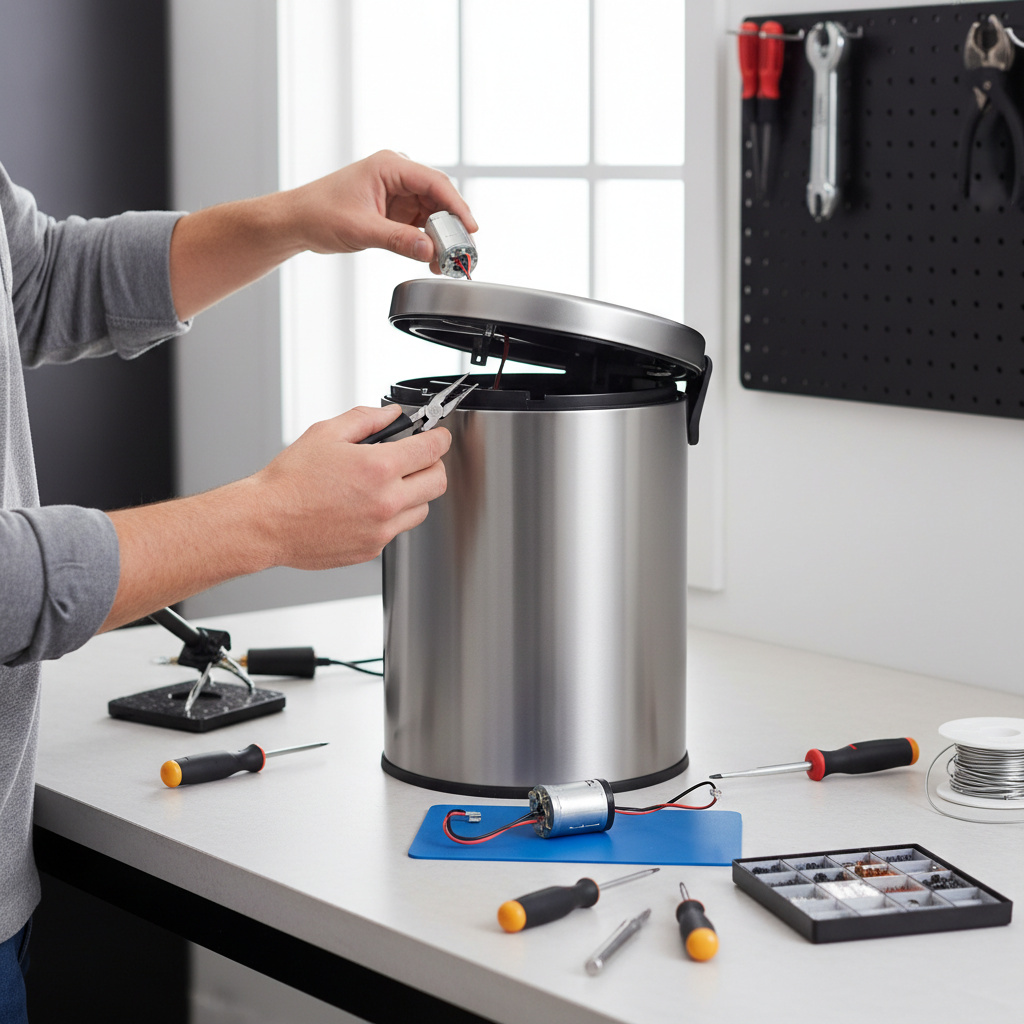
Replacing the motor in your smart trash can is a feasible DIY project for those with basic tool knowledge.
Tools You’ll Need:
- Screwdriver set (Phillips, flathead, possibly Torx)
- Prying tools (plastic spudgers or thin flathead screwdrivers)
- Multimeter (for diagnosis)
- Needle-nose pliers
- Wire strippers/cutters (if soldering is required)
- Soldering iron and solder (optional, depending on motor connection)
- Replacement motor (matched for voltage and physical size)
Diagnosis: Is It the Motor?
- Check Power: Ensure batteries are fresh or the power adapter is working. Use a multimeter to check battery voltage or power supply output.
- Sensor Check: Clean the sensor. Does it react (e.g., indicator light)? If the sensor is dead, the motor won’t activate.
- Lid Movement: If the lid attempts to move but struggles, makes grinding noises, or moves slowly, it’s likely a motor or gearbox issue. If there’s no movement at all, it could be power, sensor, wiring, or a completely seized motor.
Disassembly: Accessing the Motor
- Safety First: Disconnect all power (unplug, remove batteries).
- Examine the Lid: Most smart trash can motors are located within the lid mechanism. Look for screws around the perimeter of the lid or hidden under rubber feet/stickers.
- Remove Outer Casing: Carefully unscrew and pry open the lid’s outer plastic casing. Work slowly to avoid breaking plastic tabs. You may need to detach wires connecting the lid to the main body if present.
- Locate the Motor/Gearbox: Once inside, you’ll typically find a small motor connected to a gearbox, which in turn drives a lever or arm to open the lid.
Motor Removal and Replacement
- Inspect Wiring: Note how the motor is wired. Take photos if necessary. The wires might be plugged into a circuit board or soldered directly.
- Disconnect Wires: Carefully disconnect the motor’s wires. If soldered, desolder them. If plugged, gently pull them out.
- Remove Old Motor: Unscrew any retaining screws holding the motor to the gearbox or its mounting bracket. Carefully pry it out if it’s press-fitted.
- Identify Replacement: Note the motor’s specifications (voltage, model number if any) and physical size. Compare it to your replacement motor.
- Install New Motor: Place the new motor into the bracket or gearbox. Secure it with screws.
- Reconnect Wiring: Connect the wires to the new motor, ensuring correct polarity if applicable. Solder if necessary, or plug into the circuit board.
Reassembly and Testing
- Partial Reassembly: Before fully closing the lid, temporarily connect power (batteries).
- Test Functionality: Test the lid sensor. Ensure the new motor operates smoothly, opening and closing the lid fully without unusual noises.
- Final Assembly: If all functions correctly, carefully reassemble the lid casing, ensuring all screws are tightened and wires are neatly tucked away to avoid pinching.
- Final Test: Conduct a final test with the fully assembled unit.
Reference Price List for Smart Trash Cans
Understanding the cost of smart trash cans can help you decide if a DIY motor replacement is worthwhile compared to buying new.
| Category | Price Range (USD) | Factors Influencing Price |
|---|---|---|
| Budget | $30 – $70 | Basic sensor, plastic construction, smaller capacity, simple motor |
| Mid-Range | $70 – $150 | Stainless steel, better sensor, odor filter, larger capacity, more durable motor |
| Premium | $150 – $300+ | High-grade steel, advanced sensors (voice/kick), self-sealing, sorting, app control, robust motor/gearbox |
Cost of Replacement Motors: A generic small DC or geared motor suitable for a smart trash can typically costs between $5 – $20, making DIY replacement a cost-effective solution.
Buying Guide: Troubleshooting and Deciding on DIY Motor Replacement
Before diving into a DIY motor replacement, consider these factors to make an informed decision.
Common Motor-Related Issues
- No movement: Could be dead batteries, power connection, faulty sensor, or a completely seized motor.
- Slow/Jerky movement: Often indicates a weak motor, low battery, or a partially obstructed gearbox.
- Grinding noises: Usually a sign of stripped gears in the gearbox, which may require replacing the entire motor-gearbox assembly.
- Lid not closing fully: Can be motor related, but also due to debris blocking sensors or physical obstruction.
Deciding if DIY is Right for You
- Skill Level: Do you have experience with small electronics, basic tools, and following instructions?
- Time Commitment: DIY repairs take time. Are you prepared for potential troubleshooting?
- Cost vs. New: Is the cost of a new smart trash can significantly higher than a replacement motor and your time?
- Availability of Parts: Can you easily find a compatible replacement motor?
Mistakes to Avoid When Repairing
- Forcing parts: Never use excessive force when disassembling or reassembling, as you can easily break plastic tabs or strips screws.
- Incorrect wiring: Pay close attention to motor polarity if you’re soldering or connecting wires. Incorrect wiring can damage the motor or circuit board.
- Ignoring safety: Always disconnect power before starting any repair work.
- Using incompatible parts: Ensure your replacement motor matches the voltage and physical dimensions of the original to avoid further damage or improper function.
“A common misconception is that a ‘smart’ device is unrepairable. Often, the core mechanical components like motors are standard, making DIY fixes entirely possible with the right approach.”
Conclusion
Replacing the motor in your smart trash can is a rewarding DIY project that can save you money and extend the life of your appliance. By understanding the basics of smart trash can operation, carefully diagnosing the problem, and following a methodical approach to disassembly and reassembly, you can successfully tackle this repair. From identifying the right tools to sourcing a compatible motor, this guide empowers you to maintain the convenience of your automated waste system without professional help. Don’t let a faulty motor turn your smart bin into a nuisance; embrace the challenge and bring your smart trash can back to life. Have you ever attempted a repair on a smart home device, and what was your experience?
Frequently Asked Questions
What are the signs of a failing smart trash can motor?
Signs of a failing motor include the lid opening or closing very slowly, making grinding or clicking noises, struggling to open fully, or failing to move at all. These symptoms often point to either motor wear, low battery, or an issue with the gears.
Can I use any small DC motor as a replacement?
Not just any motor will do. You need to match the voltage (e.g., 3V, 6V, 12V) and ensure the physical size and shaft type are compatible with your existing gearbox. An exact RPM match is ideal for optimal lid speed, but a close match is often sufficient.
Is it hard to open a smart trash can lid for repair?
The difficulty varies by model. Many smart trash cans are designed with hidden screws or clips that require careful prying. Taking photos during disassembly can be very helpful for reassembly. Patience and the right tools are key to avoid damaging the casing.
Where can I find the specifications of my smart trash can’s motor?
Often, motor specifications (voltage, model number) are printed directly on the motor itself once you’ve disassembled the lid. If not, you may need to measure the motor’s dimensions and test the voltage supplied to it to find a compatible replacement.
What if the lid still doesn’t work after replacing the motor?
If the lid still doesn’t work, re-check your wiring connections and ensure the batteries are fully charged. The issue might also lie with the sensor, the main control board, or the gearbox (if only the motor was replaced). A multimeter can help test for power at various points in the circuit.