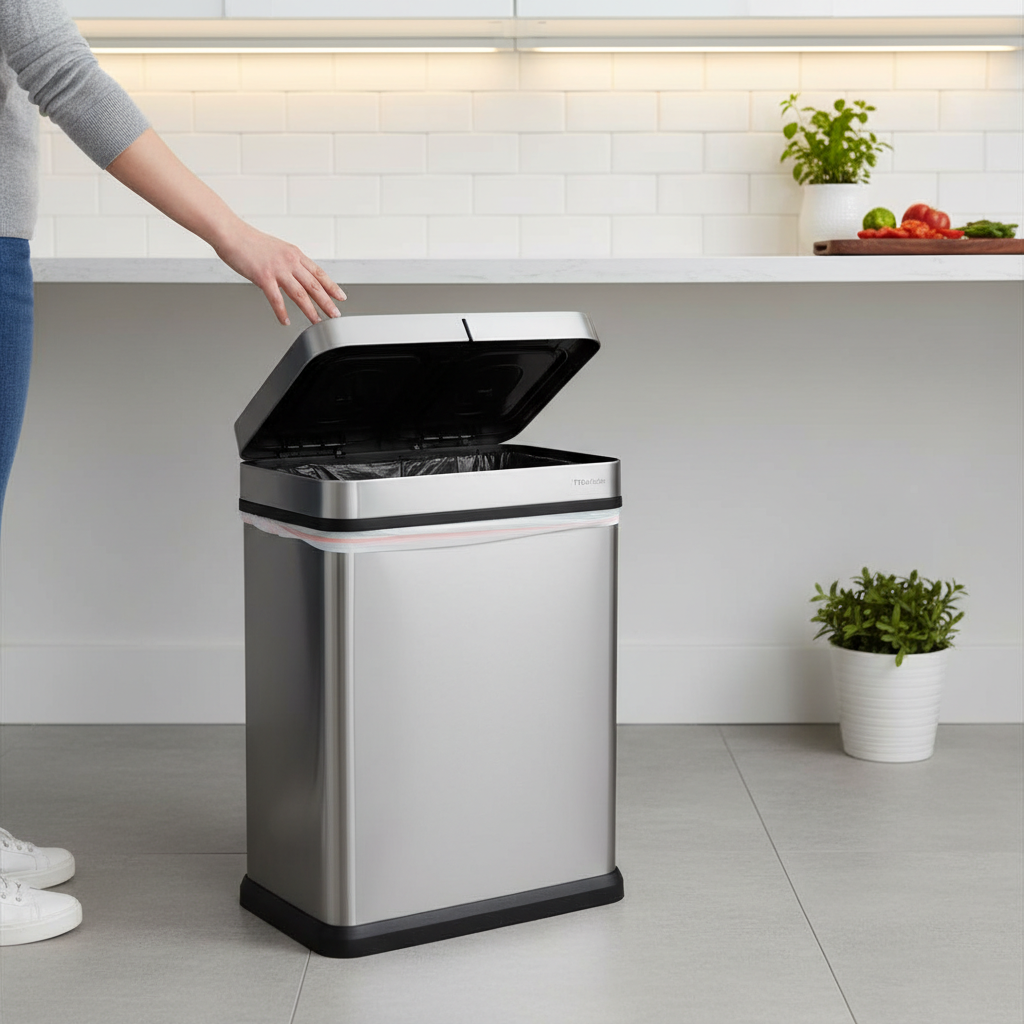
The evolution of home technology has brought forth an array of intelligent devices designed to simplify daily life, and smart trash cans stand out as a prime example of this innovation. Moving beyond basic foot pedals, these modern receptacles offer touchless operation, often relying on advanced sensor technologies. Among the most prevalent are infrared (IR) and vibration sensors, each offering distinct advantages and considerations. Understanding the nuances between these two sensor types is crucial for selecting a smart trash can that perfectly aligns with your lifestyle and enhances the convenience and hygiene of your home. This guide will delve into their core functionalities, benefits, and drawbacks, helping you navigate the smart trash can market with confidence.
What Are Smart Trash Cans and Why Use Them?
Smart trash cans represent a significant upgrade from their traditional counterparts, integrating technology to provide a more hygienic and user-friendly waste disposal experience. At their core, these devices feature automated lid opening mechanisms, eliminating the need for physical contact. Beyond this, many models include functionalities such as odor control, automatic bag sealing, and even waste compaction.
The primary appeal of smart trash cans lies in their ability to offer unparalleled convenience and improved sanitation. Imagine hands full of kitchen scraps; a simple wave or a gentle tap can open the lid, preventing the spread of germs and odors. This touchless operation is particularly beneficial in kitchens and bathrooms, promoting a cleaner environment. Furthermore, their sleek designs often complement modern home aesthetics, making them a functional yet stylish addition. The integration of various sensor types is what truly defines their “smart” capabilities, allowing for intuitive interaction with minimal effort.
Infrared Sensors: The Touchless Standard
Infrared (IR) sensors are perhaps the most common and recognizable technology in smart trash cans, synonymous with hands-free operation. They are widely adopted for their reliable proximity detection capabilities, making them a staple in modern hygienic solutions.
How Infrared Sensors Work in Smart Trash Cans
|
Our Picks for the Best Smart trash can in 2026
As an Amazon Associate I earn from qualifying purchases.
|
||
| Num | Product | Action |
|---|---|---|
| 1 | EKO Mirage-T 50 Liter / 13.2 Gallon Touchless Rectangular Motion Sensor Trash Can, Brushed Stainless Steel Finish |

|
| 2 | Ninestars 13 Gallon Oval Automatic Trash Can, 50L Touchless Motion Sensor Garbage Can with Odor-Sealing Lid & One-Touch Manual Mode, Silver Stainless Steel, Black Trim |
|
| 3 | Vanpopubs 2 Pack 2.7 Gal Bathroom Trash Can with Lid, Automatic Trash Can Small Smart Garbage Can Touchless, Slim Motion Sensor Waterproof Plastic Trash Bins for Bedroom Office Kitchen Toilet |
|
| 4 | Ninestars 13 Gallon Automatic Trash Can, 50L Touchless Motion Sensor Garbage Can with Odor-Sealing Lid, Rectangular Stainless Steel, Silver Trim |
|
| 5 | BestOffice | 13 Gallon Trash Can with Lid | Automatic Touchless Garbage Can | Odor Control | Modern Oval Design | Easy to Clean | Stainless Steel | Fits Any Kitchen, Bathroom, Office or Home |
|
| 6 | EKO Mirage-T 50 Liter / 13.2 Gallon Touchless Rectangular Motion Sensor Trash Can, Brushed Stainless Steel Finish (Matte Black) |
|
| 7 | EKO Deluxe Mirage-T 50 Liter / 13.2 Gallon Touchless Rectangular Motion Sensor Trash Can, Matte Stainless Steel Finish |
|
| 8 | Ninestars 13 Gallon Odor Neutralizing Smart Trash Can, UV + Ozone Dual Purification, Odor Control Motion Sensor Garbage Bin, Universal Power Adapter, ONT-50-81SL Stainless Steel, Silver, Nova Series |
|
| 9 | Bathroom Trash Can with Lid, KOEYLE 2 Pack 2.2 Gallon Automatic Touchless Garbage Can, Small Motion Sensor Smart Trash Can, Slim Waterproof Trash Bin for Bedroom, Bathroom, Office, Living Room (Black) |
|
| 10 | iTouchless 24 Gallon Extra Large Touchless Sensor Trash Can with AbsorbX Odor Filter, 91L Commercial Stainless Steel Automatic Kitchen Bin for Home, Office, Restaurant, Commercial Lobby, Store |
|
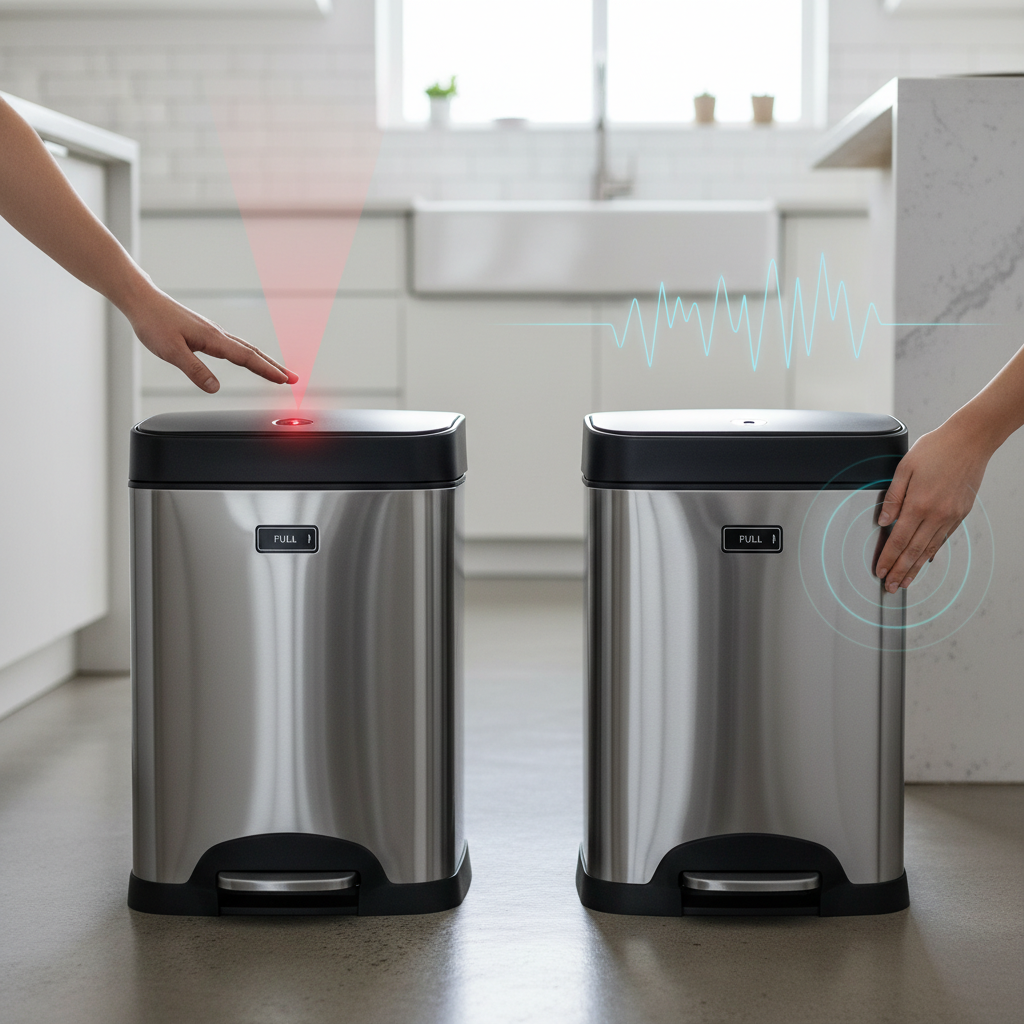
Infrared sensors in smart trash cans typically operate in one of two ways: by detecting changes in infrared radiation (passive infrared or PIR) or by emitting infrared light and measuring the reflection (active infrared). When a hand, knee, or any object enters the sensor’s detection zone, it triggers the mechanism to open the lid. This system ensures a truly touchless experience, as the lid automatically lifts when approached and closes after a few seconds of inactivity. Many models boast a swift response time, opening in as little as 0.3 seconds to accommodate immediate disposal needs.
Advantages of Infrared Sensors
Infrared sensors offer several compelling benefits for smart trash cans:
- Truly Touchless Operation: The primary advantage is undoubtedly the completely hands-free experience. Users can dispose of waste without ever touching the lid, significantly enhancing hygiene and minimizing germ transfer.
- Fast Response Time: Most IR sensors react quickly to presence, ensuring the lid opens almost instantly, which is convenient when you have waste to discard immediately.
- Energy Efficiency: Passive infrared sensors, which detect emitted heat, are often very energy-efficient, contributing to longer battery life in battery-operated smart trash cans.
- Common and Affordable: Due to their widespread use in various applications, IR sensors are a mature technology, making them cost-effective and readily available in a wide range of smart trash can models.
Disadvantages of Infrared Sensors
Despite their benefits, infrared sensors do come with certain limitations:
- Sensitivity to Environmental Factors: IR sensors can be susceptible to interference from direct sunlight, strong artificial lighting, or even steam and dust, which may lead to false positives (unintended openings) or missed detections.
- Line-of-Sight Requirement: For optimal performance, the object needs to be within the sensor’s direct line of sight. Any obstruction can prevent detection.
- Limited Range: The effective detection range for most smart trash can IR sensors is typically limited, often between 15-25 cm. Moving too quickly or being too far away might result in a delayed or missed opening.
- Accidental Triggers: In busy areas, passersby or pets might inadvertently trigger the sensor, leading to unnecessary lid openings and potentially draining battery life faster.
Vibration Sensors: An Alternative Interaction
While less common as the sole primary mechanism for lid opening, vibration sensors offer an alternative mode of interaction in some advanced smart trash cans. They cater to scenarios where a hands-free wave might not be convenient, providing a different type of touchless experience.
How Vibration Sensors Work in Smart Trash Cans
Unlike infrared sensors that detect presence or heat, vibration sensors respond to physical impacts or movements applied directly to the trash can. In a smart trash can, this typically means the lid will open when the user gently taps, kicks, or otherwise applies a slight vibration to the unit. The sensor contains an element (often a piezoelectric crystal or MEMS) that converts mechanical motion into an electrical signal. When this signal exceeds a set threshold, the lid mechanism is activated. This feature provides a distinct way to interact with the trash can, especially useful when your hands are fully occupied.
Advantages of Vibration Sensors
Vibration sensors offer unique benefits that complement or provide an alternative to infrared technology:
- Alternative Physical Interaction: The main advantage is the ability to trigger the lid with a physical tap or kick, offering convenience when hands are full or dirty. This adds a layer of user flexibility.
- Less Affected by Ambient Light: Since they respond to mechanical vibrations rather than light or heat, vibration sensors are generally not affected by lighting conditions (sunlight, shadows) or steam, which can sometimes interfere with IR sensors.
- Robust for Specific Triggers: They are designed to detect deliberate physical interaction, which can be useful in environments where continuous motion might cause frequent false IR triggers.
Disadvantages of Vibration Sensors
Vibration sensors also present their own set of drawbacks:
- Not Truly Touchless (in the purest sense): While you don’t use your hand to open it, it still requires physical contact with the trash can itself (e.g., a kick or tap), which some users might not consider fully hygienic.
- Potential for Accidental Triggers: In a bustling home or office, accidental bumps, nudges, or even vibrations from heavy foot traffic on certain floor types could inadvertently trigger the lid to open, similar to IR’s false positive issue.
- Sensitivity and Calibration: Achieving the right sensitivity to detect intentional taps while ignoring minor ambient vibrations can be a challenge and may require initial calibration. If too sensitive, it opens too often; if not sensitive enough, it won’t respond to light taps.
- Less Common as Primary Mechanism: Most smart trash cans prioritize IR for true hands-free operation, meaning vibration-only models for lid opening are rarer, often appearing as a secondary trigger in hybrid systems.
Comparison: Infrared vs. Vibration Sensors for Smart Trash Cans
When choosing between infrared and vibration sensors, or a hybrid model, it’s essential to compare their key operational aspects:
| Feature | Infrared Sensors | Vibration Sensors |
|---|---|---|
| Trigger Method | Detects presence (hand, knee) via IR light/heat. | Detects physical tap, kick, or impact on the unit. |
| Hygiene Level | Fully touchless (no physical contact with unit). | Requires physical contact (tap/kick), less hygienic. |
| False Positives | Susceptible to strong light, steam, pets, passersby. | Susceptible to accidental bumps, heavy vibrations. |
| Environmental Factors | Affected by lighting, steam, dust. | Generally unaffected by light; can be affected by floor vibrations. |
| Commonality | Very common, standard in most smart trash cans. | Less common as a primary trigger; often found in hybrid systems. |
| Ideal Use Case | Kitchens, bathrooms, high-traffic areas needing maximum hygiene. | Areas where hands are often full/dirty, offering an alternative trigger. |
Ultimately, the “better” sensor depends on your specific needs. Infrared sensors excel in providing a genuinely hands-free experience, making them ideal for high-hygiene areas like kitchens and bathrooms. Vibration sensors, on the other hand, offer a robust alternative for activating the lid when direct interaction is more practical, like when you’re carrying a large item.
Choosing the Right Sensor for Your Smart Trash Can
Selecting the perfect smart trash can involves more than just aesthetics; it requires a thoughtful evaluation of its sensor technology and how it integrates into your daily life.
Assess Your Environment
Consider where the smart trash can will be placed. In a busy kitchen with fluctuating light and potential steam, an IR sensor might occasionally misfire. In such a scenario, a vibration sensor (or a hybrid system) could offer a more reliable trigger, perhaps by kicking the base. For a quiet office or bedroom, an IR sensor is likely perfectly adequate. Think about the amount of foot traffic and ambient environmental factors that could influence sensor performance.
Consider Your User Habits
Do you prefer a purely hands-free wave, or do you find a gentle tap with your foot more convenient when your hands are often full or messy? Some individuals prefer the definitive feedback of a physical tap, while others prioritize absolute touchlessness. A family with young children might prefer an IR sensor for ease of use, while a busy cook might appreciate the option to kick the can open.
Budget and Features
Smart trash cans with hybrid sensor systems (combining both IR and vibration detection) are available, offering the best of both worlds. These models provide flexibility in how you interact with the can, allowing you to choose between waving your hand or tapping the unit. While typically at a higher price point, the added versatility might be worth the investment for optimal convenience. Standard IR-only models are generally more affordable and widely available, offering excellent value for basic touchless operation.
Future Trends in Smart Trash Can Sensor Technology
The landscape of smart home technology is constantly evolving, and smart trash cans are no exception. We are already seeing the emergence of hybrid sensor systems that combine infrared and vibration detection, providing users with multiple ways to interact with their bins. This blend offers greater flexibility and reduces the chances of false negatives.
Looking ahead, artificial intelligence (AI) and machine learning could play an even larger role. Imagine sensors that learn your habits and the environment, distinguishing between a deliberate gesture and an accidental bump with greater accuracy. Further advancements might include sensors integrated with voice commands, or even visual recognition systems that can differentiate between users or types of waste for more efficient sorting. The goal remains the same: to make waste disposal as seamless, hygienic, and intelligent as possible.
Buying Guide: Key Considerations for Smart Trash Cans
Before making a purchase, consider these vital factors to ensure your smart trash can meets all your expectations:
- Sensor Type: Decide whether infrared for pure touchless waving, vibration for physical taps/kicks, or a hybrid system best suits your preferences and environment.
- Capacity and Size: Choose a capacity appropriate for your household size and the room it will occupy. Kitchens typically require larger capacities (10-13 gallons) than bathrooms or offices.
- Power Source: Most smart trash cans are battery-operated. Check the battery type, expected battery life, and whether it’s rechargeable, to understand the maintenance commitment.
- Additional Features: Look for features like odor control (activated carbon filters), automatic bagging, manual override buttons, or inner bins for recycling separation, if these are important to you.
- Material and Durability: Stainless steel is popular for its sleek look and durability, while plastic models can be lighter and more affordable. Consider ease of cleaning and resistance to rust or dents.
- Brand Reputation and Reviews: Research reputable brands known for quality smart home products and read user reviews to gauge real-world performance and reliability.
Conclusion
The choice between infrared and vibration sensors in a smart trash can ultimately boils down to a blend of personal preference, environmental context, and desired level of interaction. Infrared sensors offer the quintessential touchless experience, excelling in hygiene and fast responses, though they can be sensitive to environmental factors. Vibration sensors provide a robust alternative for physical interaction, offering convenience when hands are full, albeit requiring direct contact. Hybrid models seek to bridge this gap, offering versatile triggering options.
As smart trash cans continue to integrate into our homes, understanding these fundamental sensor technologies empowers you to make an informed decision. The ideal smart trash can is one that not only disposes of waste efficiently but also seamlessly integrates into your daily routine, enhancing convenience and cleanliness without unnecessary fuss. Which sensor technology do you find most essential for a truly convenient smart home experience?
Câu Hỏi Thường Gặp
Are smart trash cans with both IR and vibration sensors available?
Yes, many modern smart trash cans feature hybrid sensor systems that combine both infrared and vibration detection. This allows users the flexibility to either wave their hand for touchless opening or tap the can with their foot when their hands are full, offering a more versatile and adaptable waste disposal solution.
Can infrared sensors detect pets?
Infrared sensors, especially Passive Infrared (PIR) types, are designed to detect changes in heat signatures and movement. Therefore, they can often detect pets if they move within the sensor’s range, potentially leading to unintended lid openings. Some advanced models may have settings to adjust sensitivity to minimize this.
How do I prevent false openings with smart trash cans?
To prevent false openings, consider placing your smart trash can away from direct sunlight, vents, or high-traffic areas where people or pets might constantly trigger the sensor. Some models offer sensitivity adjustments, a manual override button, or a “stay open” feature to mitigate accidental triggers.
Are vibration sensors durable?
Vibration sensors, particularly those designed for consumer products, are generally durable and built to withstand repeated physical interactions like taps or kicks. Their robustness can be an advantage in active environments. However, like any electronic component, extreme force or consistent misuse could affect their longevity.