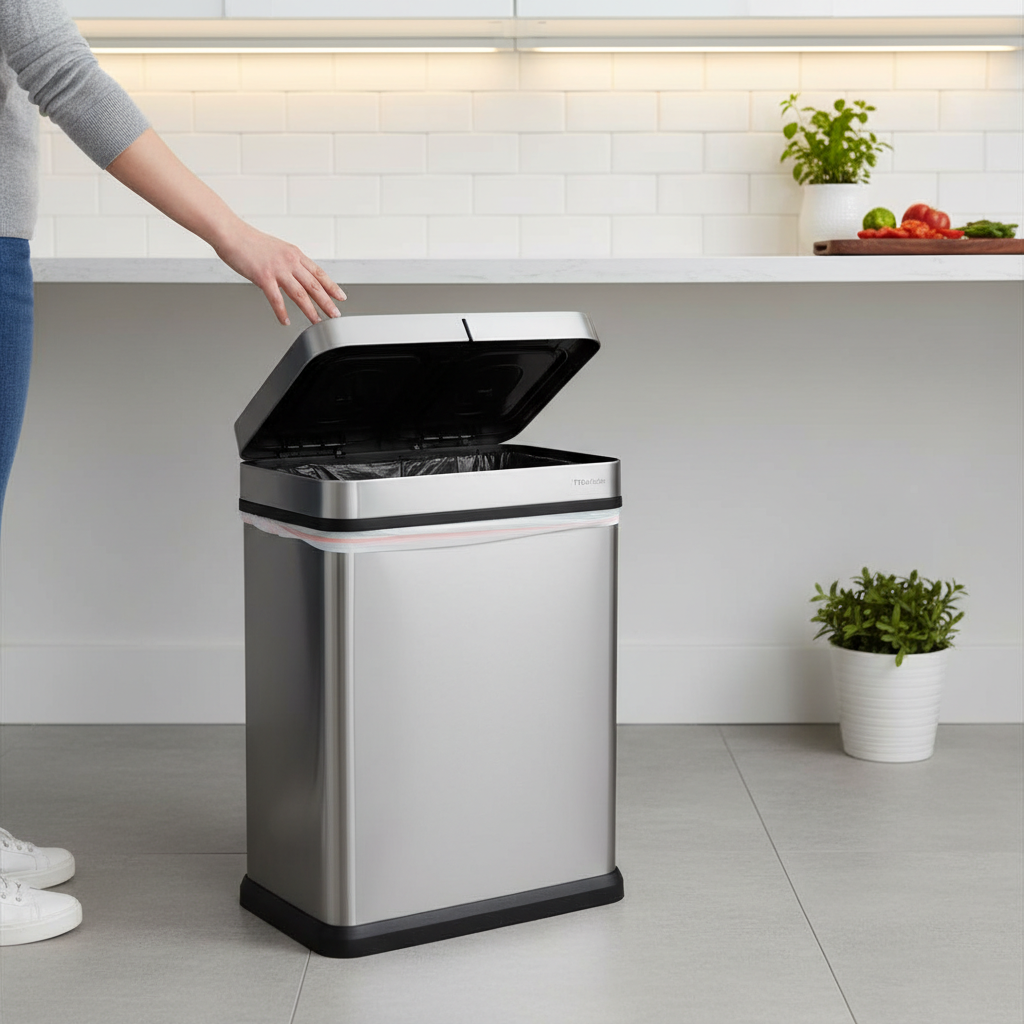
Imagine a world where disposing of trash is effortlessly hygienic, a seamless action that requires no touch and minimizes mess. This isn’t a futuristic fantasy but the everyday reality offered by sensor trash cans, which have revolutionized kitchen and home cleanliness. Among the myriad options, Simplehuman and Ninestars stand out as two prominent contenders, each promising touchless convenience but catering to different needs and budgets. Choosing between them means delving into features, durability, and the subtle nuances that define a truly smart waste solution.
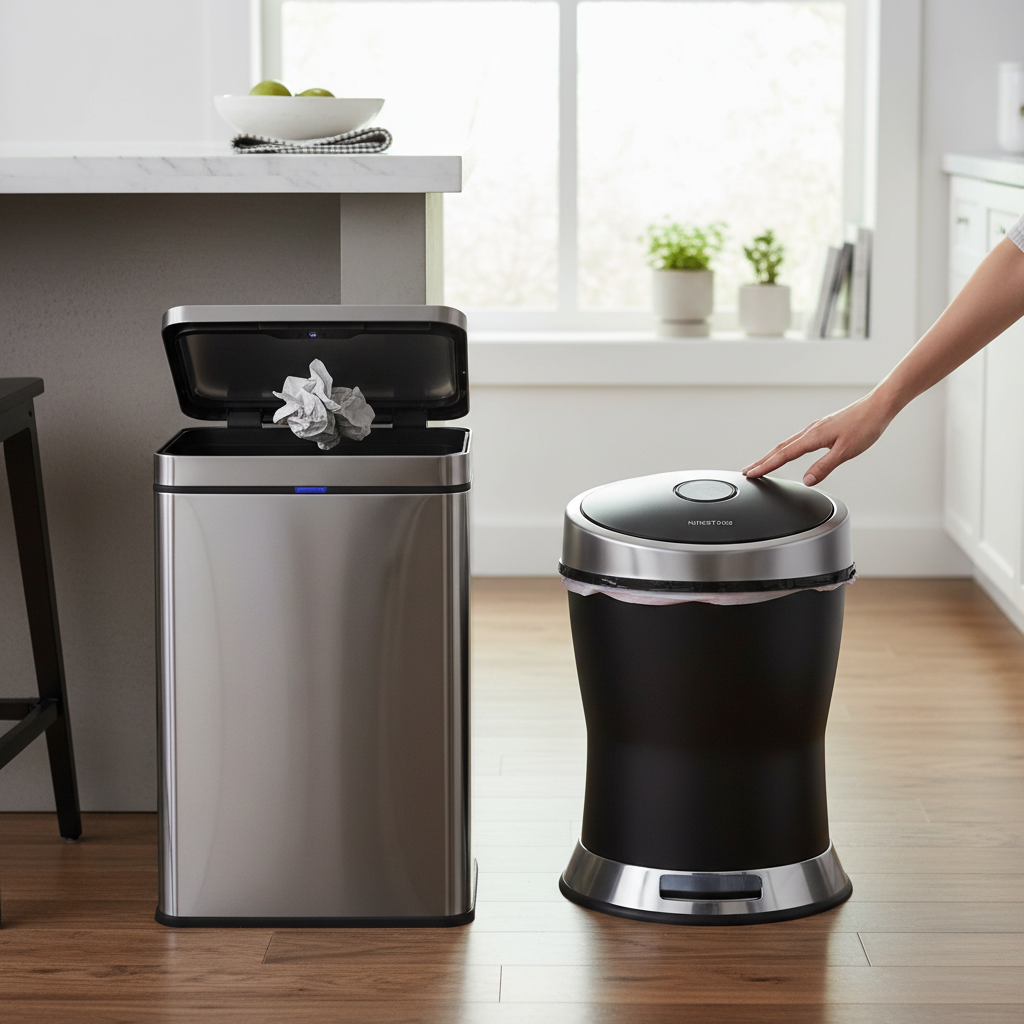
Understanding Sensor Trash Cans: Beyond Basic Bins
A smart trash can, or sensor trash can, is a modern waste bin equipped with advanced features primarily designed to enhance convenience and hygiene. At its core, these bins utilize motion sensors, often infrared, to detect a user’s presence, automatically opening the lid for hands-free disposal and then closing it after a short delay. This touchless operation transforms a mundane chore into a cleaner, more efficient process.
Why opt for a sensor trash can over traditional pedal or manual bins? The primary draw is hygiene; by eliminating direct contact with the lid, the spread of germs and bacteria is significantly reduced. This is particularly beneficial in kitchens where hands might be messy from cooking. Beyond hygiene, sensor cans offer unmatched convenience, especially when your hands are full. Their sleek, often stainless steel designs also bring a modern aesthetic to any room, elevating the overall look of your living space. When selecting a sensor trash can, consider the type of sensor technology, the can’s capacity to suit your household size, the durability of its construction materials, its power source (battery or AC adapter), any odor control mechanisms, compatibility with standard trash bags, and the longevity of its lid mechanism.
Simplehuman Sensor Cans: The Premium Experience
Simplehuman has carved out a reputation for producing high-end home goods, and their sensor trash cans are no exception. They are often synonymous with sleek design, robust build quality, and innovative features that justify a higher price point.
A standout advantage of many Simplehuman sensor cans is their advanced sensor and, on select models, voice control capabilities. Imagine simply saying “open can” when your hands are full, and the lid gracefully lifts. Their cans are typically crafted from high-quality, often fingerprint-resistant stainless steel, contributing to a premium look and feel that blends seamlessly with modern kitchens. The lid closing mechanism is engineered for quiet operation, often utilizing patented “lid shox” technology to ensure a soft, silent descent. For their step-pedal variants, Simplehuman boasts impressive durability, with pedals engineered to withstand over 150,000 steps, equating to years of reliable use. Many Simplehuman models also include a convenient built-in liner pocket, making trash bag changes quick and easy.
However, the premium Simplehuman experience comes with potential drawbacks. The higher initial cost is a significant factor for many consumers. Furthermore, Simplehuman cans are designed to work best with their proprietary “Code J” or custom trash liners. While these bags are often thicker and more durable, they can be considerably more expensive over the long term than standard trash bags. Simplehuman sensor cans typically rely exclusively on AA batteries, which usually require replacement every 6 to 12 months, and the brand does not offer an AC adapter option. Some users have also noted that the voice control can be overly sensitive, leading to unintended openings, as if the can is trying to join a conversation. While generally well-regarded for durability, some customer reviews mention issues like rusting on “stainless” finishes, peeling tops, or difficulty in obtaining replacement parts for certain models.
Ninestars Sensor Cans: Value and Practicality
Ninestars presents a compelling alternative for those seeking reliable sensor trash can functionality without the premium price tag. The brand often focuses on practical features and affordability, making its products accessible to a wider audience.
One of Ninestars’ most attractive features is its budget-friendly price point, offering touchless convenience at a more accessible cost. These cans employ infrared motion detection, typically sensing movement within a 10-inch range and a 130-degree angle, allowing for hands-free operation. Many Ninestars models feature anti-fingerprint stainless steel, helping to maintain a clean appearance. The brand offers a variety of sizes and configurations, including dual-compartment recyclers, catering to different household needs and waste separation requirements. A practical design consideration for Ninestars cans is their lid mechanism, which is often designed to avoid hitting adjacent walls or corners when opening, a thoughtful detail for compact spaces. Notably, many Ninestars cans are compatible with standard trash bags, which can lead to significant savings on ongoing costs compared to brands requiring proprietary liners.
Despite their advantages, Ninestars sensor cans do have some potential considerations. A common complaint is that the sensor sensitivity can be inconsistent, sometimes leading to “ghosting” or false triggering when someone simply walks past the can due to wide-angle infrared fields. In terms of durability, stress tests suggest that Ninestars lid mechanisms are typically rated for approximately 10,000 openings before potential gear fatigue, which is less than some higher-end competitors. Like Simplehuman, Ninestars cans are generally battery-powered (often C or D batteries) and typically offer a battery life of 6-12 months, lacking an AC adapter option for continuous power.
Head-to-Head Comparison: Simplehuman vs. Ninestars
When pitting Simplehuman against Ninestars, it’s clear that both brands offer distinct value propositions. Here’s a comparative look:
| Feature | Simplehuman | Ninestars |
|---|---|---|
| Price Point | Higher, premium | Lower, budget-friendly |
| Sensor Technology | Advanced motion, some with voice control | Standard infrared motion |
| Sensor Accuracy | Generally precise, voice can be over-sensitive | Can suffer from “ghosting”/false triggers |
| Bag Compatibility | Proprietary “Code J” liners (expensive) | Often fits standard bags (cost-effective) |
| Lid Durability (cycles) | >150,000 (step cans) | ~10,000 openings (lid mechanism) |
| Power Source | Batteries only (AA), 6-12 months | Batteries only (C/D), 6-12 months |
| Odor Control | Some models with odor absorber | Less emphasis, often basic/none |
| Aesthetics | Sleek, minimalist, premium stainless steel | Functional, anti-fingerprint stainless steel |
| Warranty | Typically 5 years | Varies, often shorter |
Sensor Accuracy and Responsiveness: Simplehuman’s more advanced motion sensors and optional voice control offer a sophisticated user experience, though the voice feature can sometimes be overly responsive. Ninestars relies on standard infrared motion, which while effective, is more prone to accidental openings (“ghosting”) when people merely pass by.
Durability and Build Quality: Simplehuman generally boasts superior build quality and lid mechanism durability, with their step cans engineered for hundreds of thousands of uses. Ninestars’ lid mechanisms, while functional, are typically rated for fewer opening cycles, suggesting a potentially shorter lifespan for the moving parts.
Long-Term Costs: This is a crucial differentiator. Simplehuman’s reliance on costly proprietary trash bags significantly increases the long-term cost of ownership, potentially adding $50-$100 annually. Ninestars, by often accommodating standard grocery store bags, offers a more economical solution in the long run. Both brands primarily use batteries, contributing to recurring costs, as neither generally offers an AC adapter.
Aesthetics and Design: Simplehuman’s designs often lean towards a minimalist, high-end aesthetic, appealing to those who view a trash can as a design element. Ninestars focuses more on functional design, providing a clean and practical appearance that fits most settings without being a focal point.
Choosing the Right Sensor Can for You
Deciding between Simplehuman and Ninestars ultimately comes down to your personal priorities and budget.
- Choose Simplehuman if: You prioritize a premium aesthetic, advanced features like voice control, a highly durable build, and a quiet, smooth lid operation. You are prepared for a higher upfront cost and ongoing expenses for proprietary trash bags and batteries.
- Choose Ninestars if: You are looking for a more budget-friendly option that still delivers reliable touchless functionality. You prefer to use standard trash bags to minimize recurring costs, and you value practicality over cutting-edge features. Ninestars is also a good choice if you need specific configurations like a dual-compartment recycler or a smaller can for a bathroom.
Consider Alternatives: It’s worth noting that other brands like iTouchless also offer compelling options, particularly if you’re seeking a balance of advanced features, superior durability (e.g., 200,000 lid cycles), and universal trash bag compatibility, often with an AC adapter option to bypass batteries entirely.
Maintenance and Longevity Tips for Your Sensor Trash Can
To ensure your sensor trash can, regardless of brand, serves you well for years, proper maintenance is key:
- Battery Replacement: Keep spare batteries on hand and replace them promptly when the sensor starts to lag or fails. Avoid rechargeable batteries in many models, as their lower voltage can cause sensor lag.
- Clean the Sensor: Gently wipe the sensor window with a soft, damp cloth to remove dust or debris that could interfere with its operation.
- Regular Cleaning: Clean the interior and exterior of the can regularly with mild soap and water or a stainless steel cleaner to prevent odors and maintain its appearance. Ensure no moisture gets into the battery compartment or lid mechanism.
- Proper Bag Usage: Always use the correct size and type of trash bag to prevent slippage and keep the sensor mechanism clear.
Smart Trash Can Buying Guide: Avoiding Common Pitfalls
Investing in a smart trash can should make your life easier, not harder. Avoid these common mistakes:
- Overlooking Bag Costs: Proprietary trash bags can significantly increase the long-term cost of ownership. Always factor these into your budget.
- Ignoring Sensor Sensitivity: A sensor that triggers too easily (ghosting) can be annoying, while one that’s too slow can negate the convenience. Read reviews to gauge real-world performance.
- Neglecting Warranty and Support: Check the warranty period and read about customer service experiences. Knowing that replacement parts are available can extend the life of your investment.
- Mismatched Capacity: Ensure the can’s capacity aligns with your household’s waste generation to avoid overly frequent bag changes or overflowing bins.
“The true measure of a smart home appliance isn’t just its features, but how seamlessly it integrates into your daily life without demanding constant attention or unexpected costs.”
Frequently Asked Questions
How often do I need to change batteries in a sensor trash can?
|
Our Picks for the Best Smart trash can in 2026
As an Amazon Associate I earn from qualifying purchases.
|
||
| Num | Product | Action |
|---|---|---|
| 1 | EKO Mirage-T 50 Liter / 13.2 Gallon Touchless Rectangular Motion Sensor Trash Can, Brushed Stainless Steel Finish (Matte Black) |

|
| 2 | Vanpopubs 2 Pack 2.7 Gal Bathroom Trash Can with Lid, Automatic Trash Can Small Smart Garbage Can Touchless, Slim Motion Sensor Waterproof Plastic Trash Bins for Bedroom Office Kitchen Toilet |
|
| 3 | Bathroom Trash Can with Lid, KOEYLE 2 Pack 2.2 Gallon Automatic Touchless Garbage Can, Small Motion Sensor Smart Trash Can, Slim Waterproof Trash Bin for Bedroom, Bathroom, Office, Living Room (Black) |
|
| 4 | Ninestars 13 Gallon Oval Automatic Trash Can, 50L Touchless Motion Sensor Garbage Can with Odor-Sealing Lid & One-Touch Manual Mode, Silver Stainless Steel, Black Trim |
|
| 5 | BestOffice | 13 Gallon Trash Can with Lid | Automatic Touchless Garbage Can | Odor Control | Modern Oval Design | Easy to Clean | Stainless Steel | Fits Any Kitchen, Bathroom, Office or Home |
|
| 6 | Ninestars 13 Gallon Odor Neutralizing Smart Trash Can, UV + Ozone Dual Purification, Odor Control Motion Sensor Garbage Bin, Universal Power Adapter, ONT-50-81SL Stainless Steel, Silver, Nova Series |
|
| 7 | EKO Deluxe Mirage-T 50 Liter / 13.2 Gallon Touchless Rectangular Motion Sensor Trash Can, Matte Stainless Steel Finish |
|
| 8 | EKO Mirage-T 50 Liter / 13.2 Gallon Touchless Rectangular Motion Sensor Trash Can, Brushed Stainless Steel Finish |
|
| 9 | Ninestars 13 Gallon Automatic Trash Can, 50L Touchless Motion Sensor Garbage Can with Odor-Sealing Lid, Rectangular Stainless Steel, Silver Trim |
|
| 10 | iTouchless 24 Gallon Extra Large Touchless Sensor Trash Can with AbsorbX Odor Filter, 91L Commercial Stainless Steel Automatic Kitchen Bin for Home, Office, Restaurant, Commercial Lobby, Store |
|
Most sensor trash cans, including Simplehuman and Ninestars, require battery replacement every 6 to 12 months, depending on usage and battery type. Some premium brands may offer longer battery life or AC adapter options.
Can I use regular trash bags in Simplehuman or Ninestars cans?
Ninestars cans often accommodate standard trash bags, offering cost savings. Simplehuman cans are specifically designed for their proprietary “Code J” or custom liners, which fit perfectly but are generally more expensive than standard bags.
Do sensor trash cans attract pests?
No, sensor trash cans, especially those with tight-sealing lids and odor control features, can actually help deter pests by keeping trash securely contained and smells minimized.
What is “ghosting” in a sensor trash can?
“Ghosting” refers to a sensor trash can opening unintentionally when someone walks by or due to other ambient movements, even if no one is directly trying to use it. This is often caused by wide-angle infrared sensors found in some brands like Ninestars.
Conclusion
The choice between a Simplehuman and Ninestars sensor trash can boils down to a balance of investment, features, and long-term running costs. Simplehuman offers a premium experience with advanced technology and elegant design, ideal for those willing to pay more for sophistication and potential durability. Ninestars provides a more practical and affordable entry into touchless waste management, offering solid functionality without breaking the bank, particularly beneficial due to its compatibility with standard trash bags. Ultimately, both brands deliver on the promise of a more hygienic and convenient home.
Which sensor can will simplify your daily routine and keep your home cleaner?