Finding the perfect smart trash can is more than just about smart features; it’s about seamlessly integrating it into your living space. With modern homes often featuring compact kitchens and designated waste areas, the lid’s opening mechanism is a critical, yet often overlooked, factor. This article delves into a detailed comparison of two popular lid designs—butterfly lids and flat lids—focusing on their clearance requirements, operational benefits, and suitability for various spatial constraints. Understanding these differences will empower you to choose a smart trash can that not only meets your technological demands but also fits flawlessly into your home.
What Are Smart Trash Cans and Why Lid Type Matters?
Smart trash cans represent a significant leap from traditional waste bins, incorporating technology to enhance hygiene, convenience, and efficiency. These advanced bins often feature motion sensors for touchless operation, odor control systems, automatic bag sealing, and even waste sorting capabilities. However, even with all these innovations, the fundamental design of the lid plays a pivotal role in the can’s practicality within your home environment.
The type of lid dictates how much overhead space a trash can requires to open fully and efficiently. In tight spots like under countertops, beneath windows, or nestled against kitchen islands, the lid’s clearance becomes paramount. An ill-suited lid can lead to frustrating scrapes against surfaces, impede full bag removal, or simply fail to open properly, negating the “smart” convenience altogether. Therefore, selecting the right lid mechanism is essential for maximizing both functionality and space utilization.
Understanding Butterfly Lid Smart Trash Cans
Butterfly lid smart trash cans offer an ingenious solution for space-conscious households. This design features a lid that splits down the middle into two halves, which then open outwards and slightly upwards.
How Butterfly Lids Work
|
Our Picks for the Best Smart trash can in 2026
As an Amazon Associate I earn from qualifying purchases.
|
||
| Num | Product | Action |
|---|---|---|
| 1 | EKO Mirage-T 50 Liter / 13.2 Gallon Touchless Rectangular Motion Sensor Trash Can, Brushed Stainless Steel Finish (Matte Black) |

|
| 2 | Bathroom Trash Can with Lid, KOEYLE 2 Pack 2.2 Gallon Automatic Touchless Garbage Can, Small Motion Sensor Smart Trash Can, Slim Waterproof Trash Bin for Bedroom, Bathroom, Office, Living Room (Black) |
|
| 3 | BestOffice | 13 Gallon Trash Can with Lid | Automatic Touchless Garbage Can | Odor Control | Modern Oval Design | Easy to Clean | Stainless Steel | Fits Any Kitchen, Bathroom, Office or Home |
|
| 4 | Vanpopubs 2 Pack 2.7 Gal Bathroom Trash Can with Lid, Automatic Trash Can Small Smart Garbage Can Touchless, Slim Motion Sensor Waterproof Plastic Trash Bins for Bedroom Office Kitchen Toilet |
|
| 5 | Ninestars 13 Gallon Automatic Trash Can, 50L Touchless Motion Sensor Garbage Can with Odor-Sealing Lid, Rectangular Stainless Steel, Silver Trim |
|
| 6 | Ninestars 13 Gallon Oval Automatic Trash Can, 50L Touchless Motion Sensor Garbage Can with Odor-Sealing Lid & One-Touch Manual Mode, Silver Stainless Steel, Black Trim |
|
| 7 | iTouchless 24 Gallon Extra Large Touchless Sensor Trash Can with AbsorbX Odor Filter, 91L Commercial Stainless Steel Automatic Kitchen Bin for Home, Office, Restaurant, Commercial Lobby, Store |
|
| 8 | EKO Mirage-T 50 Liter / 13.2 Gallon Touchless Rectangular Motion Sensor Trash Can, Brushed Stainless Steel Finish |
|
| 9 | EKO Deluxe Mirage-T 50 Liter / 13.2 Gallon Touchless Rectangular Motion Sensor Trash Can, Matte Stainless Steel Finish |
|
| 10 | Ninestars 13 Gallon Odor Neutralizing Smart Trash Can, UV + Ozone Dual Purification, Odor Control Motion Sensor Garbage Bin, Universal Power Adapter, ONT-50-81SL Stainless Steel, Silver, Nova Series |
|
Instead of a single large lid pivoting on a hinge, butterfly lids operate like two smaller doors. When activated (typically by a foot pedal or motion sensor), these two halves gracefully part, creating an opening in the center of the can. This dual-opening action minimizes the vertical space needed for the lid to fully retract.
Clearance Advantages
The primary benefit of a butterfly lid is its minimal overhead clearance requirement. Since the lids open horizontally rather than vertically, they typically need only a few inches of extra space above the can itself to function unhindered. This design makes them exceptionally well-suited for placement under low countertops, beneath wall-mounted shelves, or in other areas where vertical space is at a premium. “Butterfly lids are a game-changer for compact kitchens, allowing seamless integration where traditional flip-up lids just won’t work,” says an expert in smart home design.
Other Features & Benefits
Many butterfly lid smart trash cans incorporate advanced features such as “lid shox” technology for a slow, silent close, preventing slamming and ensuring a quiet operation. They often come with internal hinges, allowing the can to sit flush against a wall without the lid bumping into it. Their split design also helps contain odors more effectively when closed, as the opening is smaller at any given moment compared to a fully open single lid. Furthermore, the aesthetic of a butterfly lid can be sleek and modern, fitting well with contemporary kitchen designs.
Potential Drawbacks
While excellent for clearance, the opening aperture of a butterfly lid can be slightly smaller than that of a fully opened single-piece lid. This might require a bit more precision when disposing of bulkier items, though for everyday waste, it rarely poses a significant issue.
Exploring Flat Lid Smart Trash Cans
The term “flat lid” encompasses several variations, each with distinct opening mechanisms and clearance needs. These are generally the most common type of trash can lids, evolving to include smart functionalities.
Varieties of Flat Lids
- Standard Hinged/Flip-up Lids: This is the most traditional design, where a single lid piece pivots upward from a hinge at the back of the can. Many smart trash cans adopt this mechanism with motion sensors.
- Swing-Top Lids: These lids have a weighted, often removable, top that swings inwards when waste is pushed through. While they don’t require external vertical clearance, the internal swing can limit the size of items disposed of.
- Bifold/Sliding Lids: These are more specialized flat lids designed to minimize vertical obstruction. A bifold lid folds in on itself, or a sliding lid retracts horizontally, much like a drawer. These innovative designs are specifically engineered to provide low-clearance solutions while maintaining a flat top profile.
Clearance Requirements
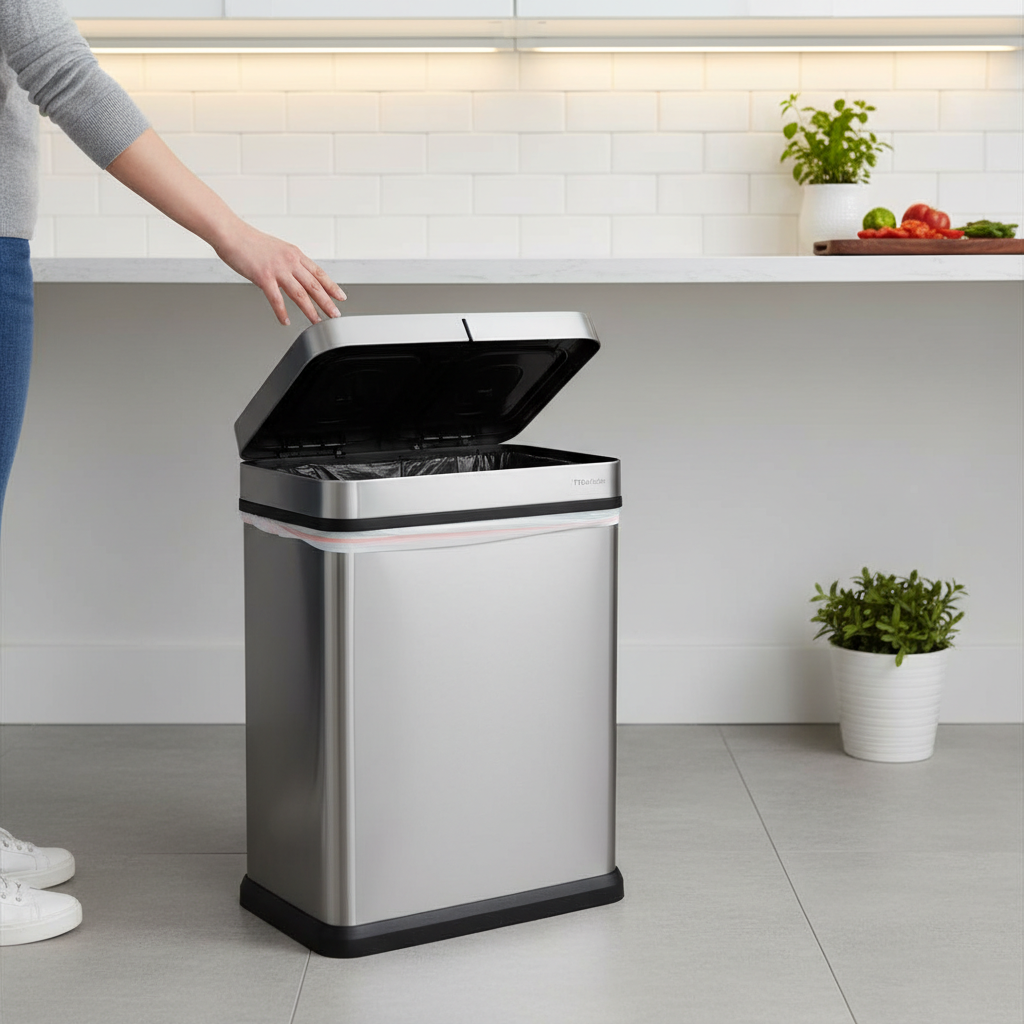
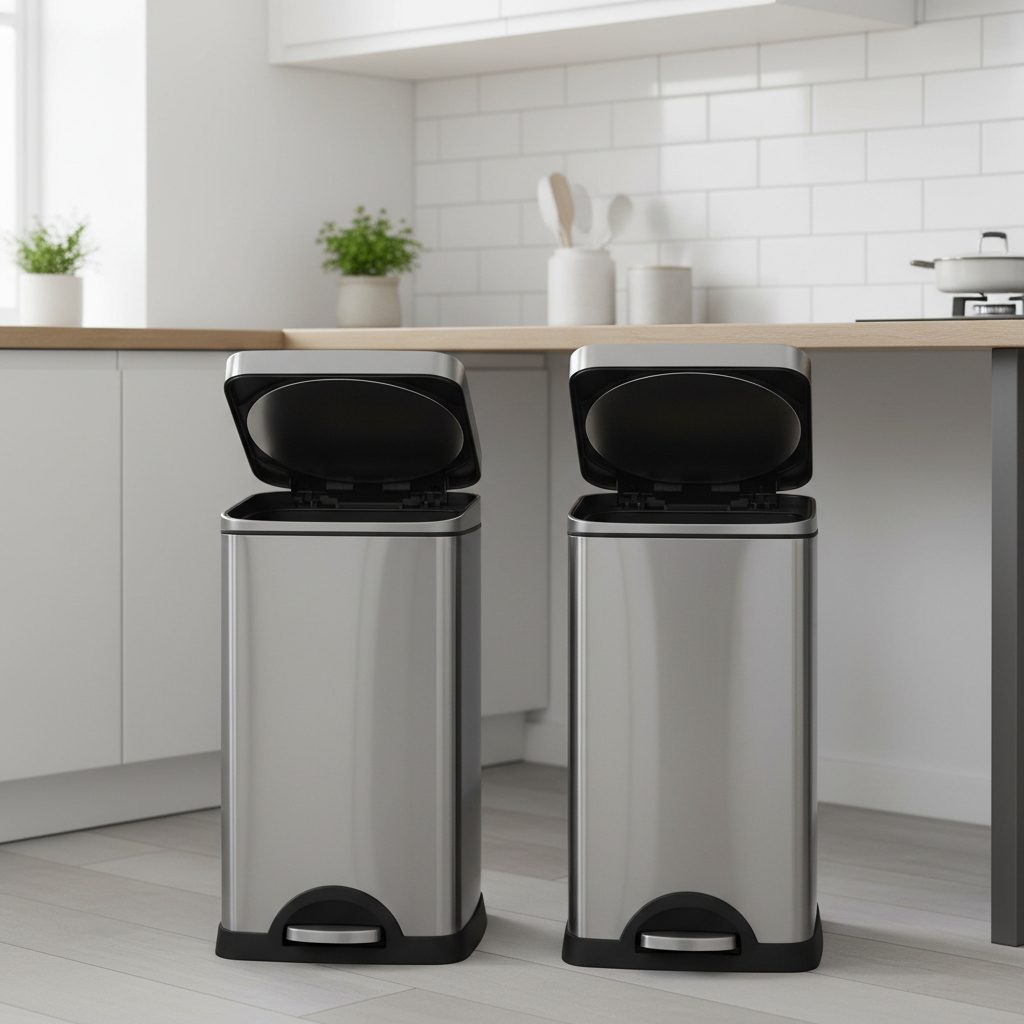
For standard hinged/flip-up lids, significant overhead space is necessary. The lid typically needs to clear its own height, plus some additional room, to open completely without hitting an obstruction. A useful estimation suggests that a swing-top lid can require clearance of approximately 1.4 times the can’s height when fully open. This makes them less suitable for under-counter placement unless the counter is exceptionally high.
In contrast, bifold or sliding lids are engineered specifically for low-clearance scenarios. Their mechanism allows them to open without requiring much vertical space above the can, making them a viable alternative to butterfly lids for tight spots. They combine the flat aesthetic with practical space-saving functionality.
Other Features & Benefits
Standard hinged lids often provide the widest possible opening when fully raised, making it easier to dispose of large or awkwardly shaped items. They are robust and simple in design, often integrated with strong steel pedals and silent-close mechanisms in smart versions. Many offer generous capacities and are available in a wide array of materials and finishes.
Potential Drawbacks
The main drawback of standard hinged lids is their substantial vertical clearance requirement, which limits their placement options. Swing-top lids, while not requiring external clearance, can sometimes get stuck or make it difficult to discard very full plates of waste. While bifold and sliding lids address clearance issues, they might have more complex mechanisms that could potentially require more maintenance over time.
Comparison: Butterfly Lid vs. Flat Lid for Optimal Clearance
When deciding between butterfly and flat lid smart trash cans, clearance is often the deciding factor. Here’s a comparative overview:
| Feature | Butterfly Lid | Flat Lid (Standard Hinged) | Flat Lid (Bifold/Sliding) |
|---|---|---|---|
| Lid Mechanism | Two halves open from center, outward & upward | Single lid pivots fully upward from hinge | Lid folds or slides horizontally/inward |
| Overhead Clearance | Minimal (few inches) | Substantial (approx. 1.4x can height) | Minimal |
| Opening Aperture | Good, but slightly narrower in the middle | Very wide when fully open | Good, can be wide |
| Best Use Case | Under counters, tight spaces, low windows | Open areas, unconstrained spaces | Under counters, tight spaces |
| Common Smart Features | Motion sensor, silent close, internal hinge | Motion sensor, silent close, foot pedal | Motion sensor, internal hinge |
| Pros | Excellent for low clearance, sleek design, quiet | Wide opening, robust, various capacities | Great for low clearance, maintains flat top |
| Cons | Smaller opening for very bulky items | Requires significant overhead clearance, not for tight spaces | Potentially more complex mechanism |
For households with strict height limitations, butterfly lids and specialized bifold/sliding flat lids are superior choices. They are designed to operate efficiently without needing excessive room above the can. If vertical space is not an issue, a standard hinged flat lid might offer a wider opening and simpler mechanics.
Key Factors When Choosing Your Smart Trash Can
Selecting the ideal smart trash can goes beyond just the lid type. Consider these elements to make an informed decision:
Space Availability
This is paramount. Measure your available vertical height (from the floor to the bottom of your countertop or window sill) and compare it against the can’s full open height. Also, measure the width and depth to ensure the can fits its designated footprint, especially if it has an internal hinge to sit flush against a wall.
Waste Volume & Type
Consider how much trash your household generates and the nature of that waste. If you often discard large pizza boxes or bulky food packaging, a wider opening provided by some flat lids might be more convenient. For everyday kitchen scraps, both lid types perform well.
Smart Features Desired
Beyond the lid mechanism, identify the smart features most important to you:
- Motion Sensors: Hands-free convenience.
- Odor Control: Carbon filters or UV-C sterilization for a fresher environment.
- Self-Sealing/Bag Changing: Automated systems for ultimate hygiene.
- Recycling Compartments: Dual bins for separating waste and recyclables.
Aesthetics & Material
Smart trash cans come in various materials, including stainless steel (often fingerprint-resistant), durable plastic, and different colors. Choose a material and finish that complements your kitchen or bathroom decor.
Budget
Smart trash cans range widely in price. Determine your budget, keeping in mind that advanced features, larger capacities, and premium materials typically come with a higher price tag.
Where to Find Reliable Smart Trash Cans
Reliable smart trash cans are available through a variety of retailers, both online and in physical stores. Major online platforms like Amazon, Wayfair, and manufacturer websites (such as Simplehuman) offer extensive selections with detailed product descriptions and customer reviews. For a hands-on experience, visit electronics stores or home goods retailers. Always prioritize vendors who offer comprehensive product information, clear warranty policies, and responsive customer service. Reading user reviews can provide real-world insights into product performance and durability.
Buying Guide: Making the Right Choice
Choosing the right smart trash can is about balancing innovative features with practical design and spatial constraints. The key is thorough planning and understanding your specific needs.
Before purchasing, ask yourself:
- Where will the trash can be placed? (Under a counter, next to an island, in an open corner?)
- What is the exact vertical clearance above this spot when the lid is fully open? Don’t forget to account for any lip or trim on your counter.
- How much waste do I generate daily, and what is its typical size?
- Which smart features are essential for my lifestyle?
Avoid common mistakes such as failing to measure your space accurately, underestimating the actual height needed for a lid to open, or buying a can with features you don’t truly need, which can lead to unnecessary expense.
Pricing and Brands
Smart trash cans are available across various price segments, influenced by brand reputation, capacity, materials, and the sophistication of their smart features.
Pricing Tiers
- Budget-Friendly ($30-$80): Typically smaller capacities, basic motion sensors, and often made of plastic. Good for bathrooms or small offices.
- Mid-Range ($80-$200): Larger capacities, stainless steel options, more reliable sensors, silent-close lids, and sometimes basic odor control. Many popular butterfly lid models fall into this category.
- Premium ($200+): Top-tier brands, advanced features like voice control, self-sealing mechanisms, UV-C sterilization, dual compartments, and premium finishes.
Factors Affecting Price
The primary factors influencing price include the brand’s reputation (e.g., Simplehuman often commands higher prices due to design and durability), capacity, the material (stainless steel is generally more expensive than plastic), and the suite of smart features included (e.g., automatic bag replacement, advanced odor filtration, or Wi-Fi connectivity).
Using and Maintaining Your Smart Trash Can
Proper usage and maintenance will ensure your smart trash can performs optimally and lasts for years.
- Installation: Follow the manufacturer’s instructions for initial setup, especially for battery installation or connecting to a power source. Ensure sensors are not obstructed.
- Cleaning: Regularly clean both the exterior and the removable inner bucket. For stainless steel, use appropriate cleaners to prevent smudges and maintain its finish. For lid mechanisms, gently wipe sensors and moving parts to prevent debris buildup.
- Battery/Power: Most motion-sensor cans run on D-cell batteries; keep spares on hand. Some models offer AC adapters or rechargeable batteries. Ensure the power source is reliable for consistent touchless operation.
- Bag Replacement: Use bags that are the correct size and fit snugly to prevent slippage and leaks. For self-sealing models, ensure the refill rings are properly loaded.
Conclusion
The choice between a butterfly lid and a flat lid smart trash can ultimately hinges on your unique spatial requirements and personal preferences. While traditional flat lids can offer a wide opening for unconstrained areas, butterfly lids and advanced bifold/sliding flat lids excel in environments where every inch of vertical clearance matters. Smart features, capacity, material, and budget also play significant roles in this decision.
By carefully measuring your space, evaluating your waste habits, and considering the available smart technologies, you can confidently select a smart trash can that brings unparalleled hygiene, convenience, and seamless integration into your home. Which lid design will unlock the most efficiency in your living space?
Frequently Asked Questions
Do butterfly lid trash cans really save space?
Yes, butterfly lid trash cans are specifically designed to save overhead space. Their split-door mechanism means they require only a few inches of clearance to open fully, making them ideal for placement under low countertops or windows where a traditional hinged lid would hit an obstruction.
What’s the best trash can for under a kitchen sink?
For under a kitchen sink or any area with minimal vertical clearance, a smart trash can with a butterfly lid or a bifold/sliding lid is generally the best choice. These designs minimize the lid’s vertical travel during opening, ensuring functionality in confined spaces.
Are touchless lids available for both butterfly and flat lid types?
Yes, touchless technology, typically using motion sensors, is available across various lid types, including both butterfly and different styles of flat lids. This ensures hygienic, hands-free operation regardless of the specific lid mechanism.
How much clearance do I need for a standard flip-up lid?
A standard flip-up lid requires significant overhead clearance. As a general rule, you might need approximately 1.4 times the height of the trash can itself to allow the lid to open completely without hitting an overhead obstruction. Always measure your specific can and space.
Can I place a butterfly lid trash can directly against a wall?
Many butterfly lid smart trash cans are designed with an internal hinge, allowing them to be placed directly against a wall without the lid mechanism interfering. This feature further enhances their space-saving capabilities in tight spots.